
 |
The Proximal Medial Tibial Locking Plate is a specialized trauma implant designed to stabilize the medial column of the proximal tibia. It is primarily used for medial tibial plateau fractures (AO/OTA Type 41-B and 41-C) and is often employed as a neutralization or buttress plate in complex bicondylar fractures. Because the medial plateau carries a significant portion of the knee's compressive load, fractures here are prone to vertical shearing and collapse. Constructed from high-strength Titanium Alloy (Ti6Al4V ELI), this plate is anatomically contoured to fit the medial proximal tibia perfectly, providing a rigid, fixed-angle construct. The proximal head features a specific cluster of locking screws that secure the articular fragments, while the shaft provides stable anchorage to the tibial diaphysis. The TOOLMED Medial Tibial Plate is engineered to restore joint alignment and withstand the high mechanical stresses of the lower limb, facilitating early mobilization and successful bone healing.
3309-0801
TOOLMED
TA3
1 Pcs
5-15 Days
/
Product Description
The plate is pre-shaped to mirror the specific anatomy of the medial tibial flare. This ensuring a "glove-like" fit that acts as a powerful buttress against the shearing forces common in medial plateau fractures.
Utilizes locking screw technology to create a rigid internal fixator. This is vital for the medial side, where the plate must prevent the bone fragments from sliding downward (vertical shear) under the body's weight.
The proximal portion of the plate is engineered with a reduced profile to minimize irritation of the soft tissues on the inner knee, where skin and subcutaneous tissue are relatively thin.
The screw holes in the head are strategically angled to capture diverse fracture fragments and provide a stable "raft" of support directly beneath the medial joint surface.
Primary indication for isolated medial split or depression fractures (Schatzker IV).
Used in conjunction with a lateral plate (double plating) for Schatzker V and VI fractures to provide 360-degree stability to the knee joint.
Indicated for fractures extending into the proximal third of the shaft where medial column support is required.
Can be used to stabilize corrective bone cuts in the proximal tibia where medial fixation is clinically preferred.

| Product Name | Proximal Medial Tibial Locking Plate |
| Material | TA3 |
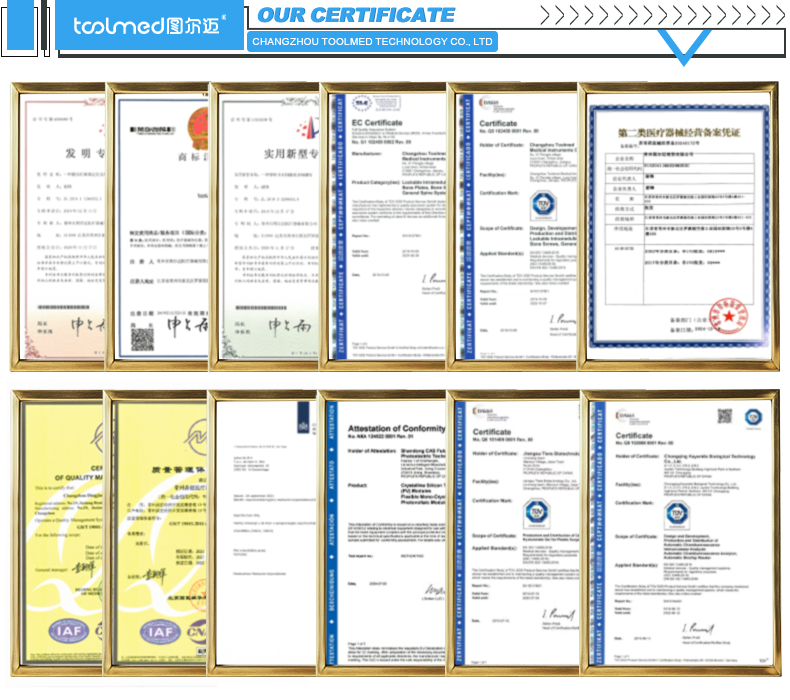
| Certificate | CE Certificate |
| Brand | TOOLMED |
| MOQ | 1 Pcs |
| OEM | Avaliable |
| Package | PE Inner Bag+Carton |
| Payment Method | T/T,Bank transfer, Western Union |
| Delivery Time | 5-15 Days |
| Shipping | DHL EMS UPS TNT FEDEX |


This is a titanium "internal brace" used to fix breaks on the inner side of the shinbone (tibia) just below the knee. The medial plateau is a critical weight-bearing surface; if it breaks, the knee joint can become unstable and tilt inward. This plate is shaped to fit the inner curve of the bone and uses locking screws to hold the fragments tightly together. It acts as a "buttress," or a supportive wall, that prevents the bone from shifting while you heal.
The medial plate is often used for "high-energy" injuries. In many cases, a single plate on the outside isn't enough to hold the whole knee together. Surgeons use this medial plate to bridge the inner side of the fracture, ensuring that both sides of the knee joint are perfectly level. This is the only way to ensure the knee will work correctly and pain-free in the future.
The Locking technology is the primary advantage. In the past, screws could pull out of the bone, especially if the bone was soft. With this system, the screws lock into the plate itself. This creates a solid "frame" that stays put even under heavy pressure. It allows the surgeon to fix the bone securely without needing to squeeze the plate too hard against the bone, which helps protect the bone's blood supply.
Biomechanically, the medial side of the knee is under constant compression. When the bone breaks, those forces try to push the medial fragment downward. The Medial Tibial Plate is designed to resist these shear forces. By acting as a fixed-angle buttress, the plate converts those downward forces into stability, allowing the bone fragments to knit back together in their original anatomical position.
The surgeon makes an incision on the inner side of the knee. After the bone fragments are carefully moved back into place and checked with an X-ray, the plate is positioned. The locking screws are then inserted into the head to secure the joint surface, followed by screws in the shaft to finalize the fix. The plate is designed to be "low profile" so it doesn't bother the tendons and skin in that area.
Because the medial side carries so much weight, patients usually have to be very careful with weight-bearing for the first 6 to 8 weeks. However, because the plate is so stable, you can often start moving and bending your knee very soon after surgery. This "early motion" is the best way to prevent the knee from getting stiff and to ensure a faster return to walking.
The Proximal Medial Tibial Locking Plate is a vital component in the treatment of complex knee fractures. Its anatomical design and superior locking strength provide the mechanical security needed to maintain joint alignment, protect the medial column, and give patients the best chance at a full recovery.
A medial plate is needed when the fracture is on the inner side of the knee. If both sides are broken (bicondylar fracture), the surgeon will often use both a medial and a lateral plate to "sandwich" the bone for maximum stability.
The inner side of the knee has less muscle than the outer side. While the plate is ultra-thin (low-profile), you might be able to feel the outline of the plate if you have very little body fat in that area. It is generally not visible to others.
Typically, it takes about 3 months for the bone to show strong healing on an X-ray. The plate does the heavy lifting during this time to make sure the bone doesn't move while it heals.
Most patients keep the plate forever. However, if it causes any irritation after the bone is fully healed (usually after a year or more), it can be removed in a simple procedure.
Yes. The plate is made of high-quality titanium, which is non-magnetic. You can safely have an MRI, though the metal will cause a small "shadow" in the immediate area of the image.
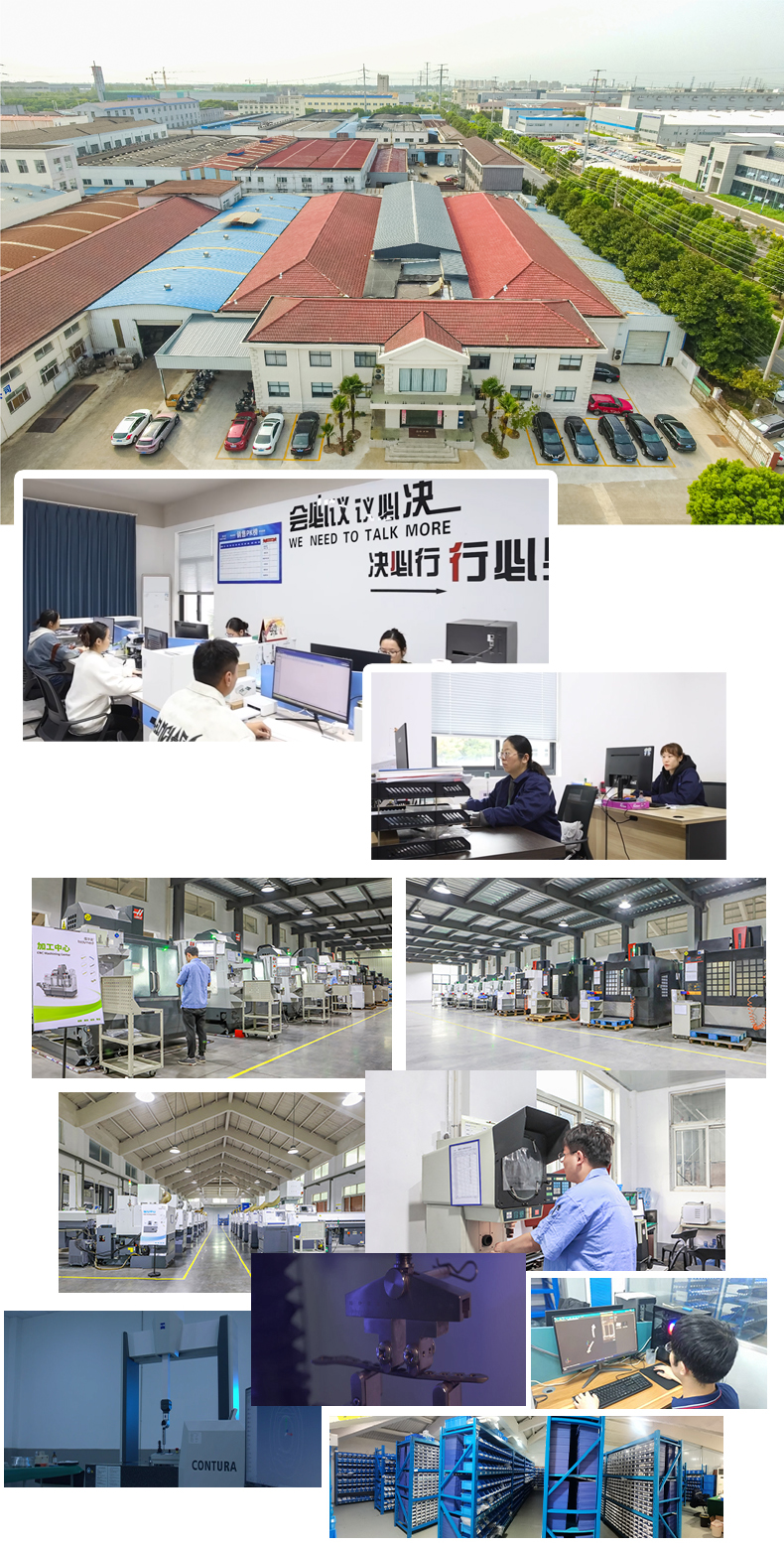
Our factory is equipped with over 60 advanced CNC machines operated by 100+ skilled technicians, a 300 m² GMP-compliant clean room, and a 10,000 m² production facility. We maintain a CNAS and ISO 17025 certified testing center, invest heavily in CNC turning technology, and utilize high-precision inspection systems including CMM, PP, and QV to ensure product quality and consistency.
We offer fast and reliable global shipping. Standard lead times range from 7 to 15 working days, depending on order quantity and customization requirements. Express delivery options are also available upon request.
Yes, we ship to most countries worldwide. We work with trusted logistics partners to ensure timely and secure delivery.
We accept a variety of payment options, including T/T (bank transfer), L/C, and PayPal for smaller orders. Payment terms can be discussed based on order volume and partnership agreements.
Yes, samples are available for evaluation. Please contact our sales team to request product samples and shipping arrangements.
Absolutely. We offer OEM/ODM services including custom packaging, branding, and product development tailored to your specifications.


