
 |
3306-0501
TOOLMED
TA3
1 Pcs
5-15 Days
/
Product Description
The proximal hooks provide a mechanical "grip" on the top of the greater trochanter, preventing the fragment from being pulled away by the hip muscles—a common failure point in traditional plate designs.
By utilizing locking screws in the shaft, the plate acts as an internal fixator. This ensures that the alignment is maintained even in osteoporotic bone where screw "strip-out" is a high risk.
Despite the addition of hooks, the plate maintains an ultra-low profile. The smooth, rounded edges are designed to prevent irritation of the iliotibial (IT) band during hip movement.
Forged from premium titanium to ensure the hooks have the necessary stiffness to hold bone fragments under the intense tension of the gluteal tendons.
Specifically designed for fractures where the "bump" on the side of the hip is pulled off by the attached muscles.
Used in multi-fragmentary fractures where the lateral wall needs to be "reined in" and supported from the top down.
Indicated for revision cases where previous hardware failed to control the trochanteric fragment.
Can be used to fix fractures that occur around an existing hip replacement stem (periprosthetic fractures) involving the trochanter.
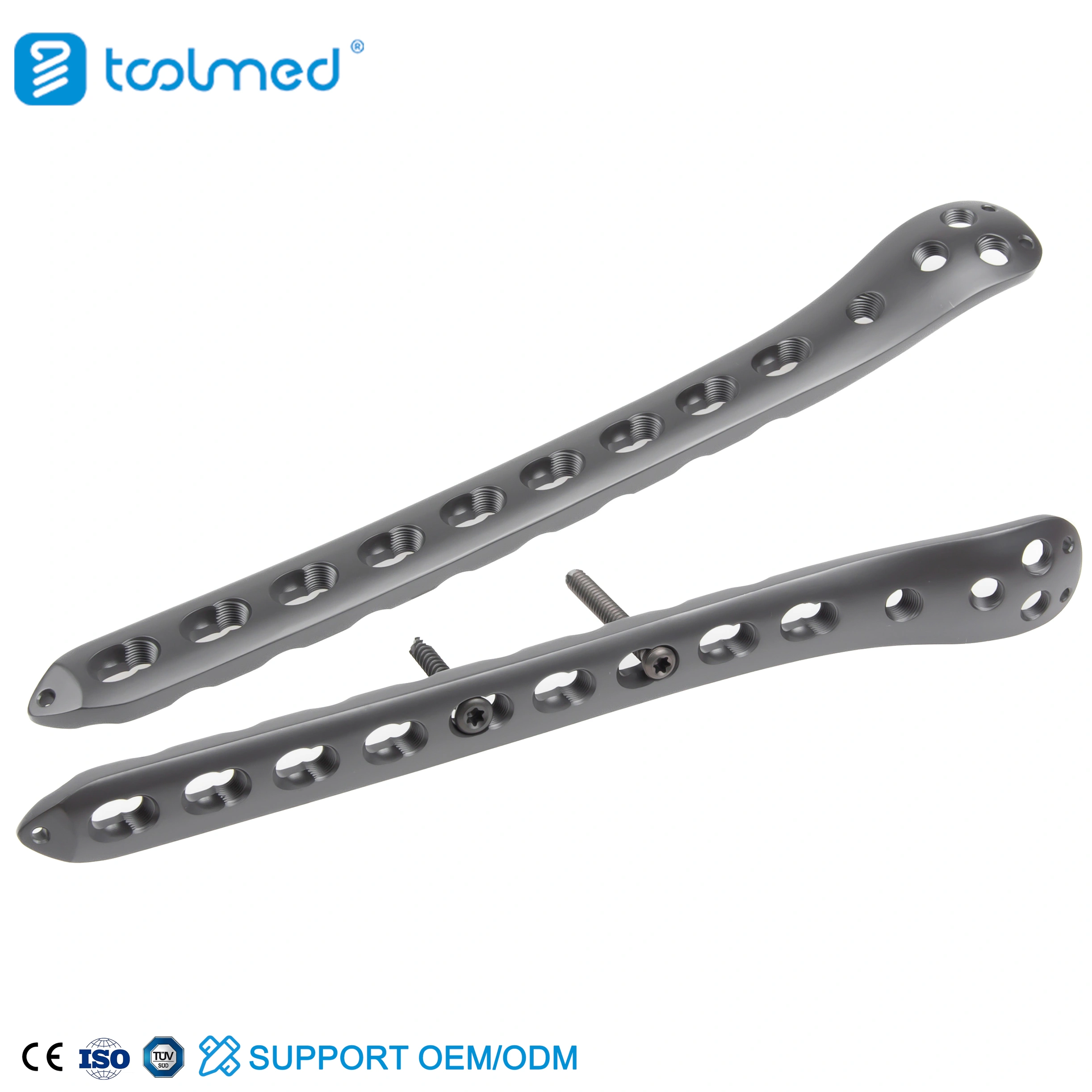
| Product Name | Proximal Femoral Hook Locking Plate |
| Material | TA3 |
| Certificate | CE Certificate |
| Brand | TOOLMED |
| MOQ | 1 Pcs |
| OEM | Avaliable |
| Package | PE Inner Bag+Carton |
| Payment Method | T/T,Bank transfer, Western Union |
| Delivery Time | 5-15 Days |
| Shipping | DHL EMS UPS TNT FEDEX |

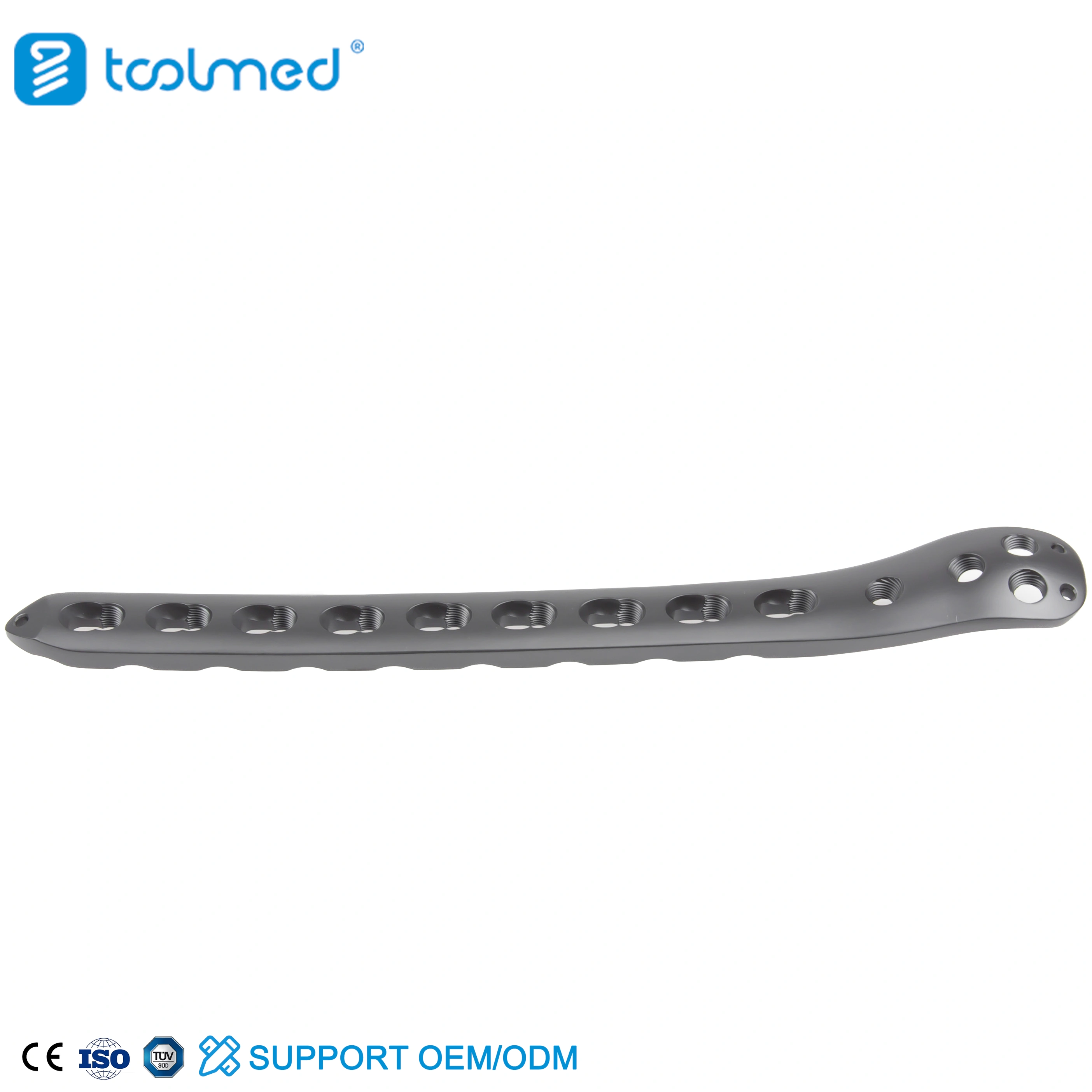
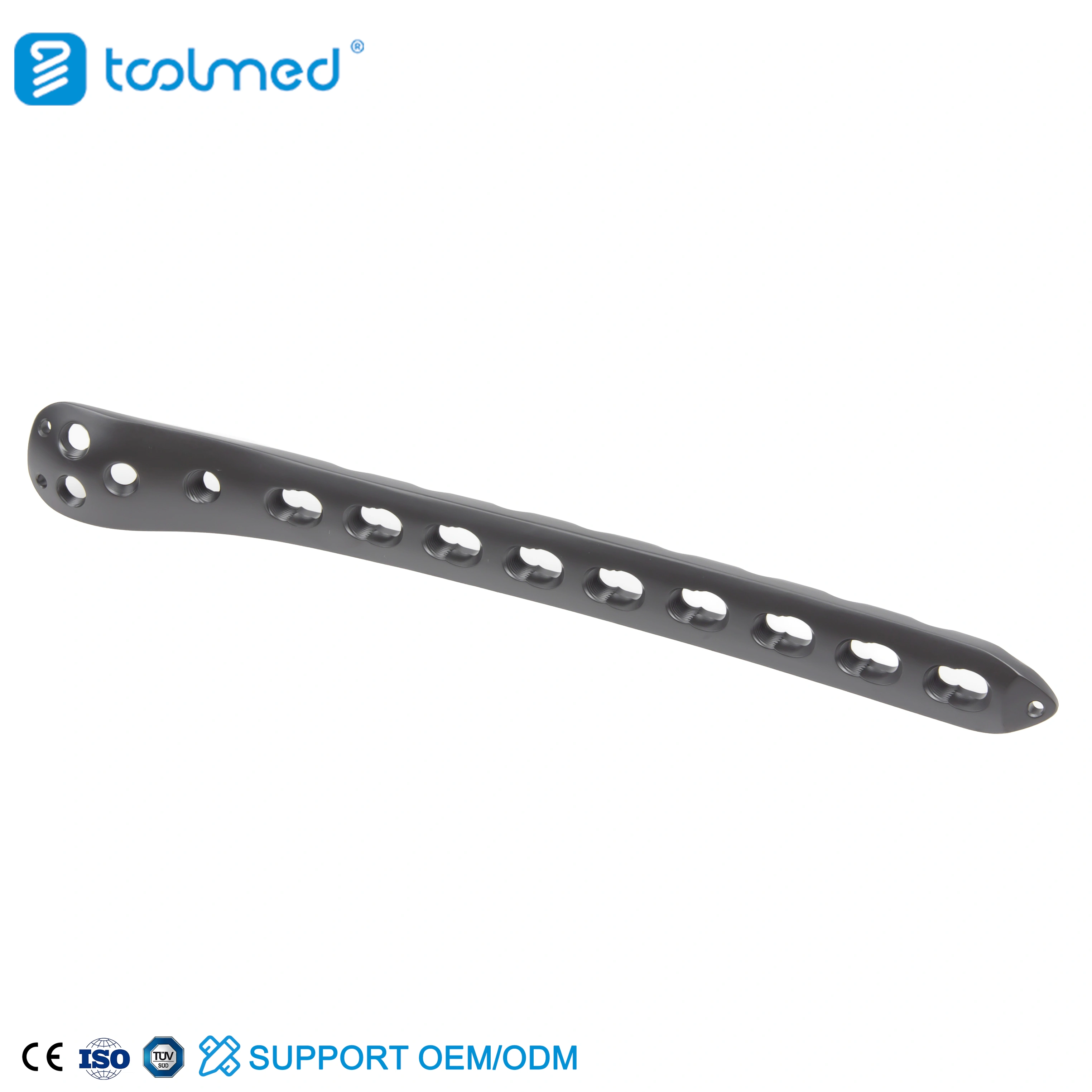
This is a specialized version of a hip plate that features sharp "hooks" at the very top. Think of it like a claw that reaches over the top of your hip bone (the greater trochanter) to hold it down. This is used when the bone is broken in a way that your hip muscles are trying to pull the pieces upward toward your waist. The hooks keep the bone exactly where it belongs so it can heal.
Surgeons choose the Hook Plate when a standard plate or nail isn't enough to "catch" the broken pieces at the top of the hip. It is very common in high-energy injuries or in older patients whose bones have become brittle. By hooking onto the bone, the plate provides a "tension-band" effect that is incredibly strong.
The primary advantage is superior fragment control. In fractures where the bone is shattered, screws sometimes don't have enough "good bone" to bite into. The hooks provide a mechanical connection that doesn't rely solely on screws. Combined with Locking technology, this creates a "fixed-angle" frame that is much more stable than older methods.
Biomechanically, your gluteal muscles are some of the strongest in your body. When the trochanter breaks, these muscles act like a rubber band, pulling the bone fragment away. The Hook Plate acts as an anti-glide device, neutralizing the upward pull of the muscles and allowing the patient to start moving the hip without the fracture falling apart.
The surgeon makes an incision on the side of the hip. The hooks are first "seated" over the top of the greater trochanter. Once the hooks are in place, the rest of the plate is aligned with the thigh bone and secured with locking screws. This "top-down" approach ensures the most important part of the fracture is stabilized first.
Because the hooks provide such a secure grip, patients can often begin "toe-touch" weight-bearing and gentle hip range-of-motion exercises very early. This helps prevent the hip from getting stiff. The titanium plate is designed to be permanent, so you won't need a second surgery to remove it unless it causes irritation after the bone is 100% healed.
The Proximal Femoral Hook Locking Plate is an essential implant for complex hip trauma. By combining anatomical hooks with modern locking stability, it provides a unique mechanical solution for fractures that are otherwise difficult to fix, ensuring a faster return to mobility for the patient.
The hooks are placed deep under the thick muscles and tendons of the hip. While everyone's body is different, most patients do not feel the hooks at all once the surgical site has fully healed.
For fractures where the "greater trochanter" (the side bump) is broken off, the Hook Plate is often much better because a standard screw cannot always catch that specific piece of bone. The hooks provide a "clamping" force that a screw cannot match.
Most hip fractures take about 3 to 4 months for the bone to grow back together. During this time, the plate does 100% of the work to keep your leg stable.
Yes. Like all TOOLMED trauma plates, the Hook Plate is made from non-magnetic titanium alloy, making it completely safe for MRI and CT scans.
The hooks are an integrated part of the titanium plate and are secured by the screws in the shaft. It is extremely rare for the hooks to move once they are properly seated and the plate is locked to the bone.
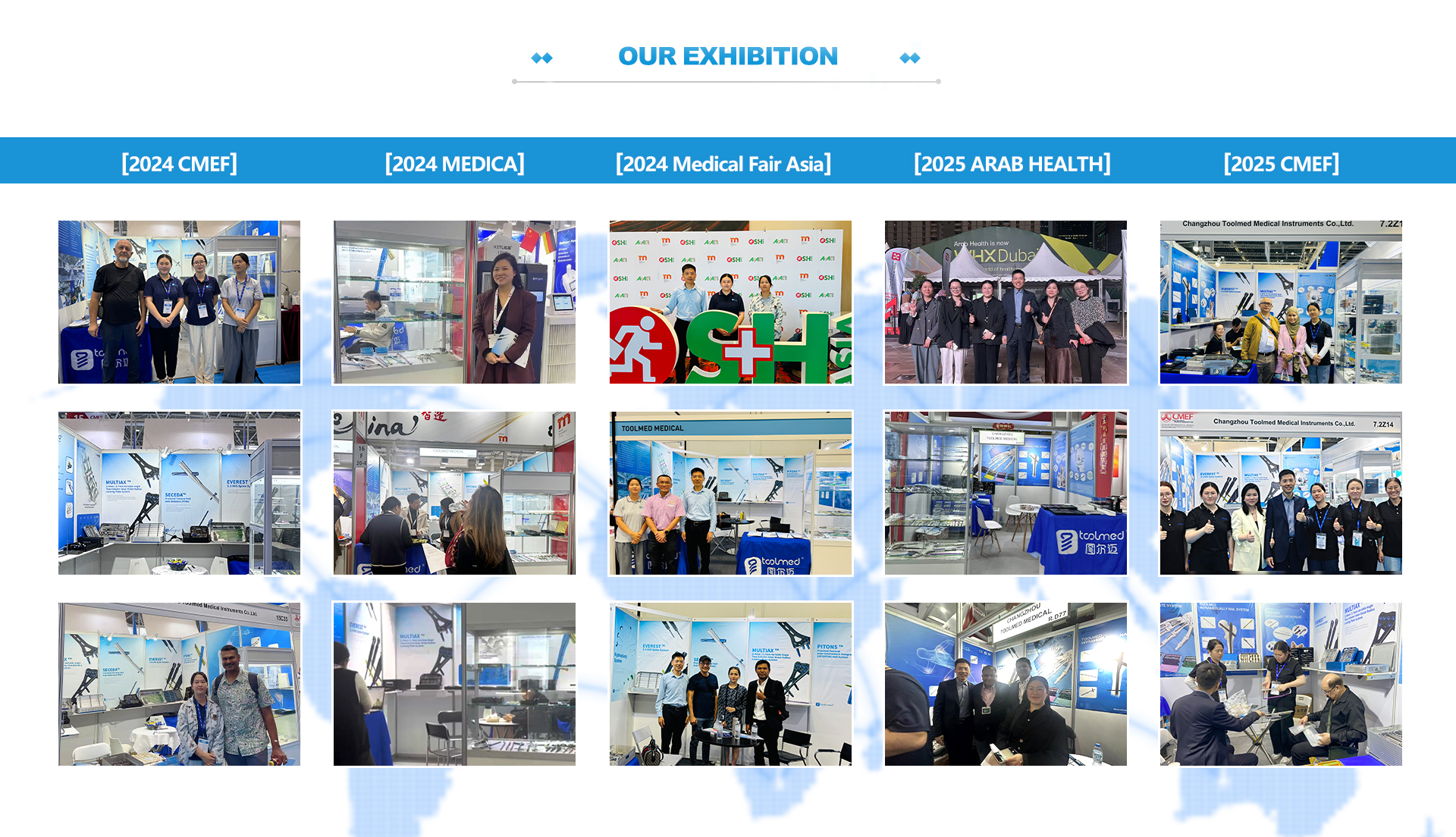
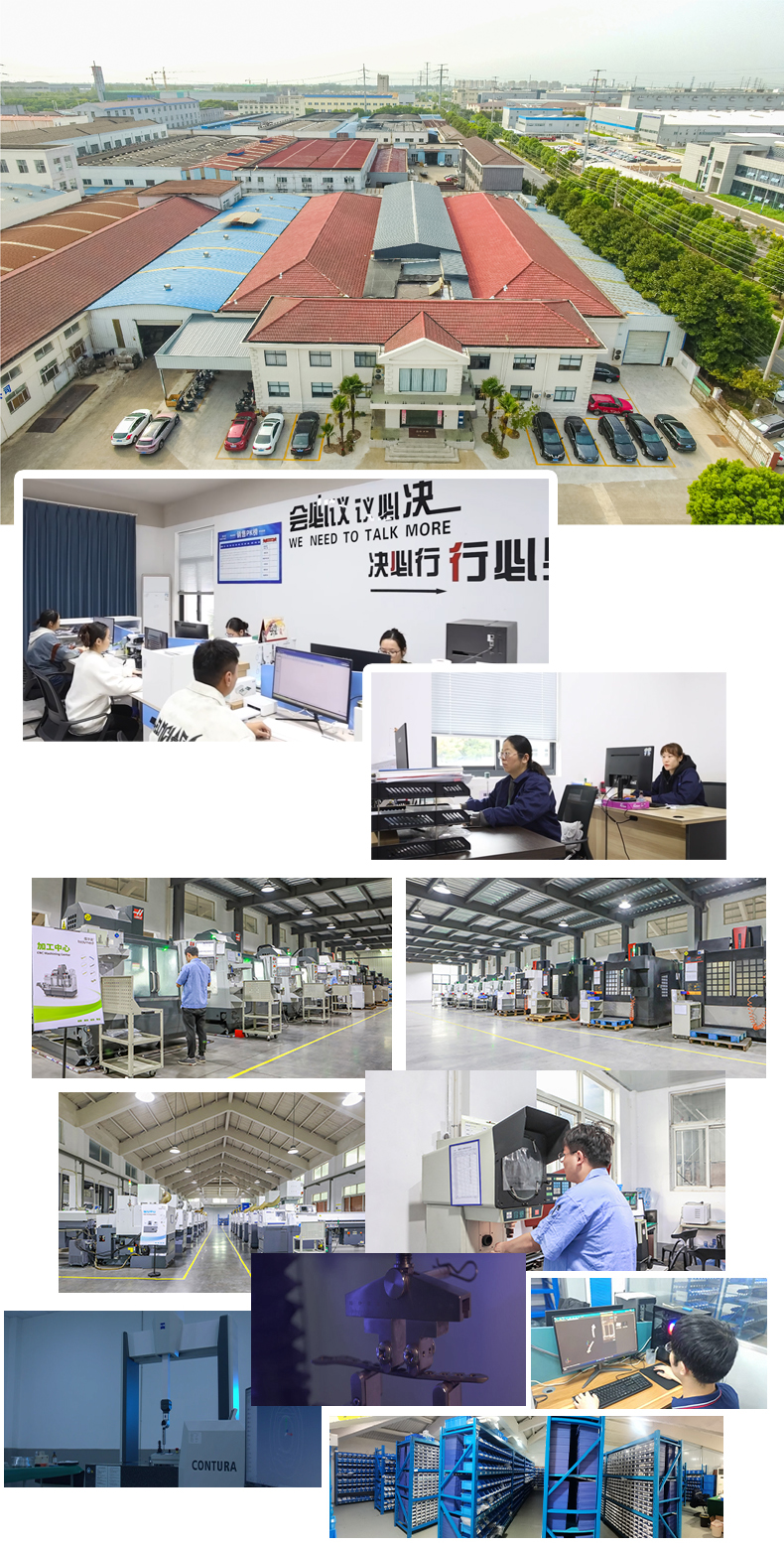
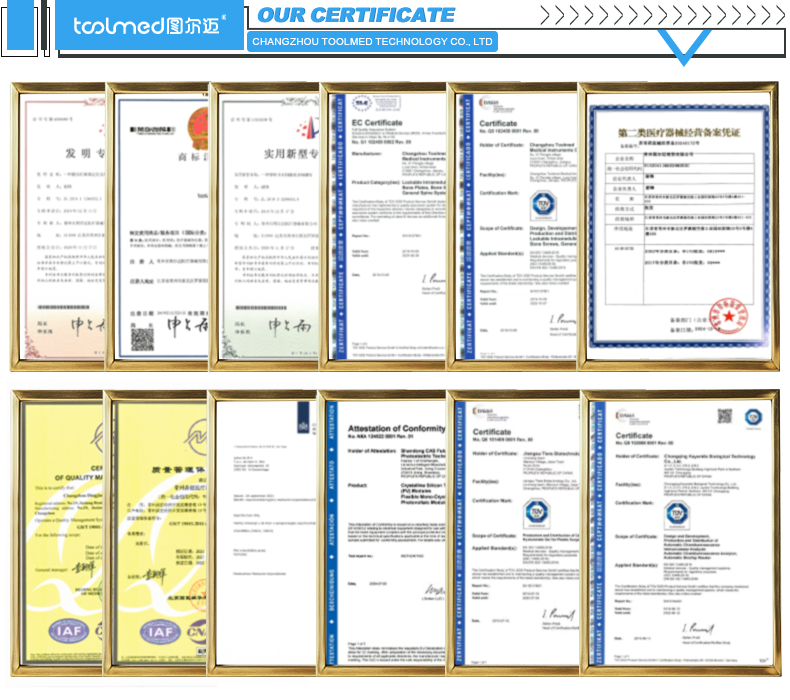
Our factory is equipped with over 60 advanced CNC machines operated by 100+ skilled technicians, a 300 m² GMP-compliant clean room, and a 10,000 m² production facility. We maintain a CNAS and ISO 17025 certified testing center, invest heavily in CNC turning technology, and utilize high-precision inspection systems including CMM, PP, and QV to ensure product quality and consistency.
We offer fast and reliable global shipping. Standard lead times range from 7 to 15 working days, depending on order quantity and customization requirements. Express delivery options are also available upon request.
Yes, we ship to most countries worldwide. We work with trusted logistics partners to ensure timely and secure delivery.
We accept a variety of payment options, including T/T (bank transfer), L/C, and PayPal for smaller orders. Payment terms can be discussed based on order volume and partnership agreements.
Yes, samples are available for evaluation. Please contact our sales team to request product samples and shipping arrangements.
Absolutely. We offer OEM/ODM services including custom packaging, branding, and product development tailored to your specifications.


