
 |
3301-0901
TOOLMED
TA3
1 Pcs
5-15 Days
/
Product Description
Certain plates include a proximal hook that grasps the olecranon tip, providing powerful fixation for highly comminuted fragments and resisting triceps pull-off forces.
The plate acts biomechanically as a tension band, converting the distracting force of the triceps muscle into a compressive force at the fracture site, promoting faster healing.
Locking screws provide rigid support to small bone fragments, ensuring a stable reconstruction of the articular surface (trochlear notch) of the elbow joint.
The design is streamlined and accurately curved to fit the bone, minimizing soft tissue irritation and hardware prominence on the posterior aspect of the elbow.
Primary indication for comminuted, displaced, or multi-fragmentary fractures of the olecranon that extend into the elbow joint.
Used to salvage failed previous fixations or treat symptomatic non-union of the olecranon, often requiring bone grafting.
Indicated for ulnar shaft/olecranon fractures where stable internal fixation is required to restore the length and alignment of the ulna and stabilize the radial head.
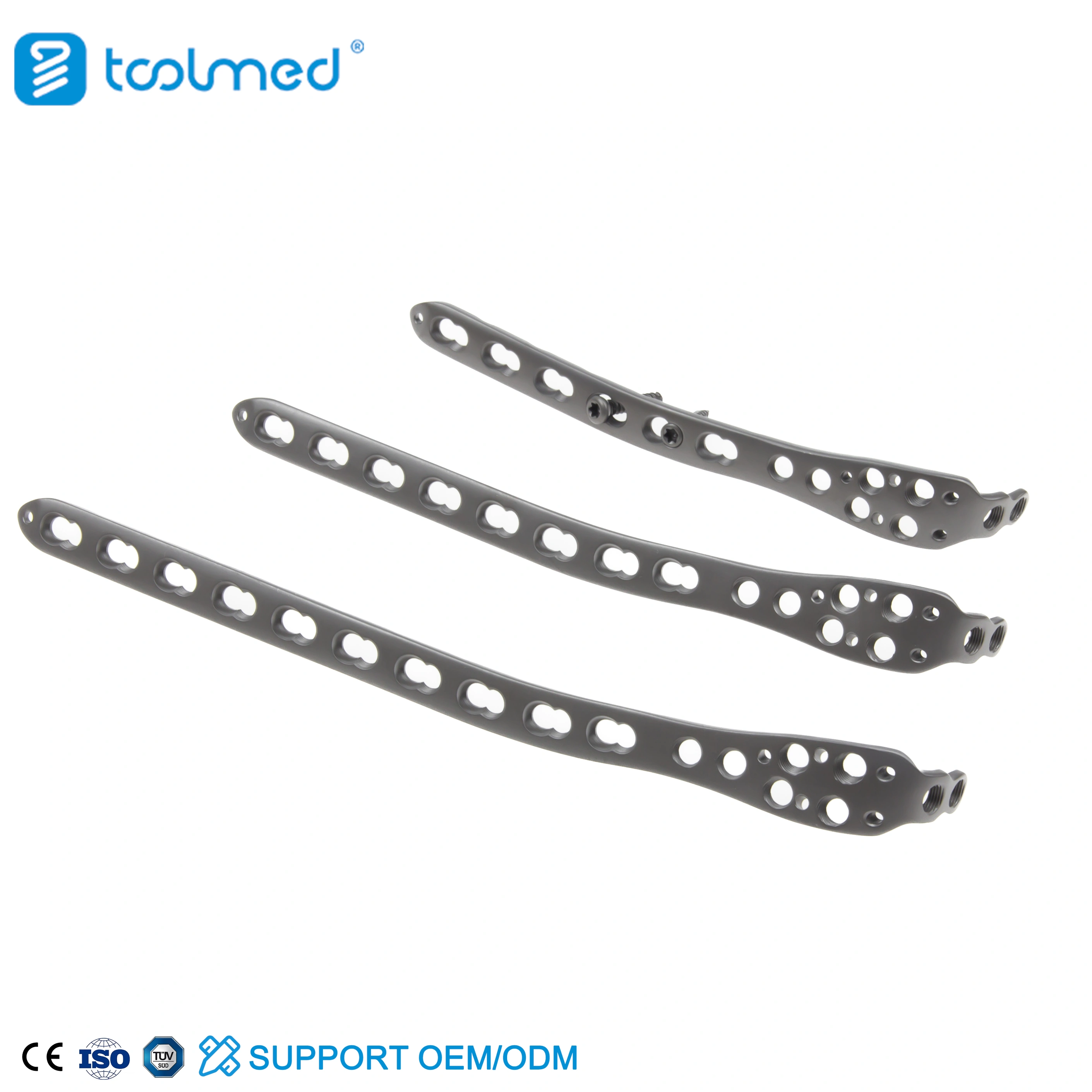
| Product Name | Olecranon Locking Plate |
| Material | TA3 |
| Certificate | CE Certificate |
| Brand | TOOLMED |
| MOQ | 1 Pcs |
| OEM | Avaliable |
| Package | PE Inner Bag+Carton |
| Payment Method | T/T,Bank transfer, Western Union |
| Delivery Time | 5-15 Days |
| Shipping | DHL EMS UPS TNT FEDEX |

The Olecranon Locking Plate is a curved titanium metal plate used to fix severe breaks in the elbow tip (olecranon). The olecranon is critical because the powerful triceps muscle attaches there. When it breaks, the triceps pulls the fragment away. This specialized plate is screwed onto the bone to create a strong, internal tension band that resists the muscle pull and holds the joint surface perfectly aligned.
This plate is essential for treating complex elbow fractures, usually caused by a direct fall onto the elbow. Unlike simple wires (tension band wiring), the locking plate is used for highly splintered (comminuted) fractures where wires alone would fail. It allows the surgeon to meticulously piece together the joint surface for optimal recovery.
The key advantage is superior stability and early motion. The locking screws resist the extreme triceps tension, providing a fixation strong enough to withstand early movement. This allows physical therapy to begin quickly, which is absolutely vital for preventing the elbow joint from becoming permanently stiff—a major risk with elbow fractures.
Biomechanically, the plate is positioned on the tension side (posterior) of the ulna. When the arm is straightened, the triceps pulls the bone apart. The plate resists this pull, turning it into a force that pushes the bone fragments together (compression). This mechanism, combined with fixed-angle support, ensures a stable, load-sharing environment for healing.
The surgeon makes an incision over the back of the elbow. The fracture fragments are carefully exposed and reduced (aligned). The contoured plate is positioned posteriorly and secured first with non-locking screws to achieve compression, then with locking screws to provide fixed-angle stability. The position is carefully checked to ensure the hardware does not impinge on the joint motion.
Given the risk of stiffness, rehabilitation starts immediately, often involving gentle, controlled range-of-motion exercises. The patient wears a temporary brace for protection, but the locking plate is strong enough to allow the elbow to be safely moved, leading to significantly better long-term functional results than traditional immobilization.
The Olecranon Locking Plate is the state-of-the-art fixation method for complex elbow trauma. Its anatomical contouring, tension-band function, and locking stability provide the rigid platform necessary to restore the elbow's smooth joint surface and facilitate the crucial, early post-operative mobilization.
The olecranon is very superficial. While the plate is low-profile, it may be slightly palpable (feelable) under the skin, especially at the tip of the elbow. It is sometimes removed later if it causes irritation.
Elbow plates have a higher rate of removal than other implants (up to 50%) due to hardware irritation, particularly where the plate extends over the bony tip. Removal is usually performed 12–18 months after healing if it becomes symptomatic.
Older wire fixation (tension band wiring) often fails in comminuted fractures and is not strong enough to allow early motion. The locking plate provides multi-point, fixed-angle stability, making it far superior for complex breaks.
Stiffness is the primary complication of elbow fractures. By providing rigid fixation, the locking plate minimizes the time the joint needs to be immobilized, dramatically lowering the risk of permanent stiffness.
Titanium is preferred for the elbow due to its lower stiffness (closer to bone), which is thought to reduce the chance of implant-related pain and stress shielding compared to stiffer stainless steel.
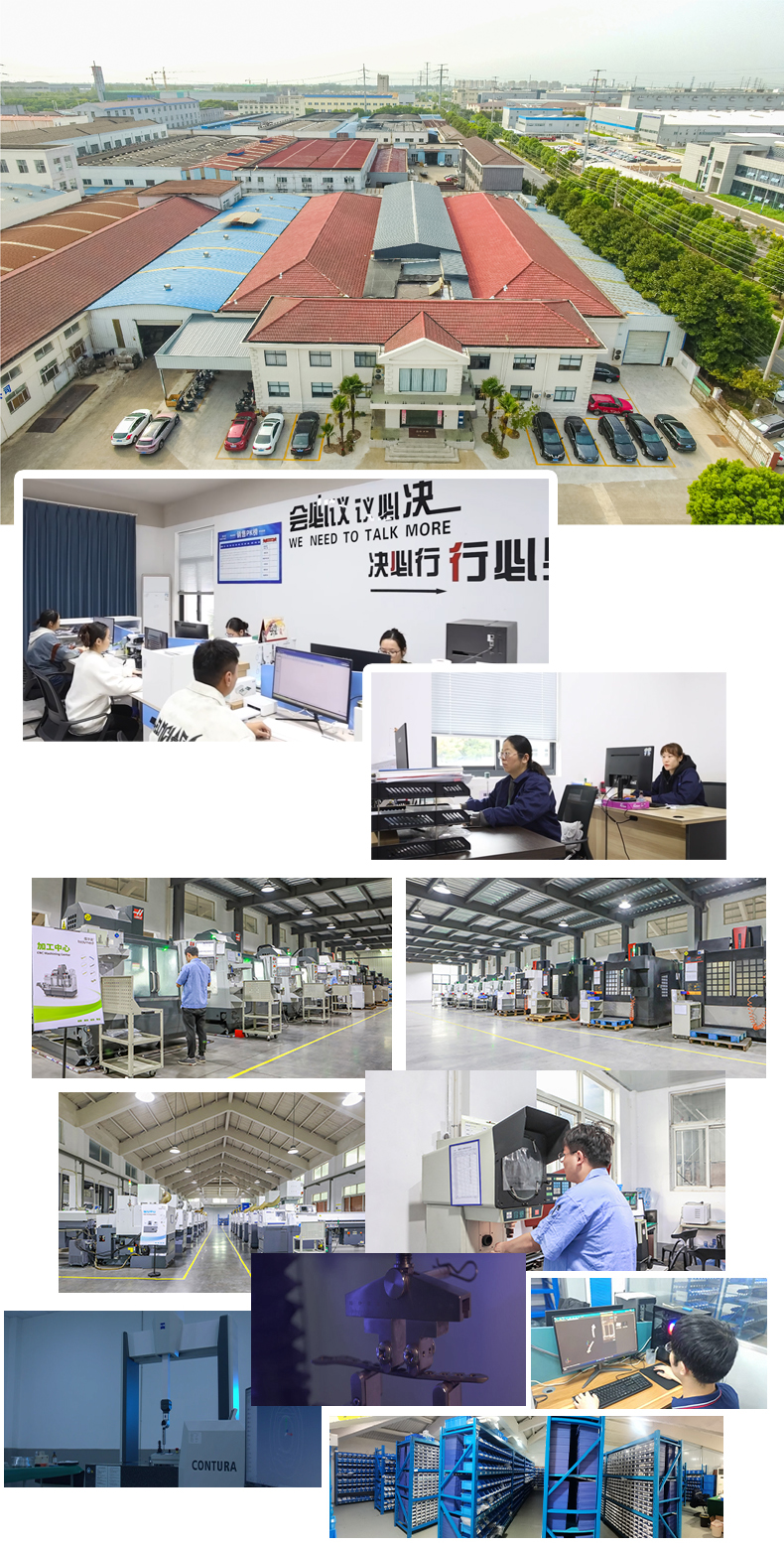
Our factory is equipped with over 60 advanced CNC machines operated by 100+ skilled technicians, a 300 m² GMP-compliant clean room, and a 10,000 m² production facility. We maintain a CNAS and ISO 17025 certified testing center, invest heavily in CNC turning technology, and utilize high-precision inspection systems including CMM, PP, and QV to ensure product quality and consistency.
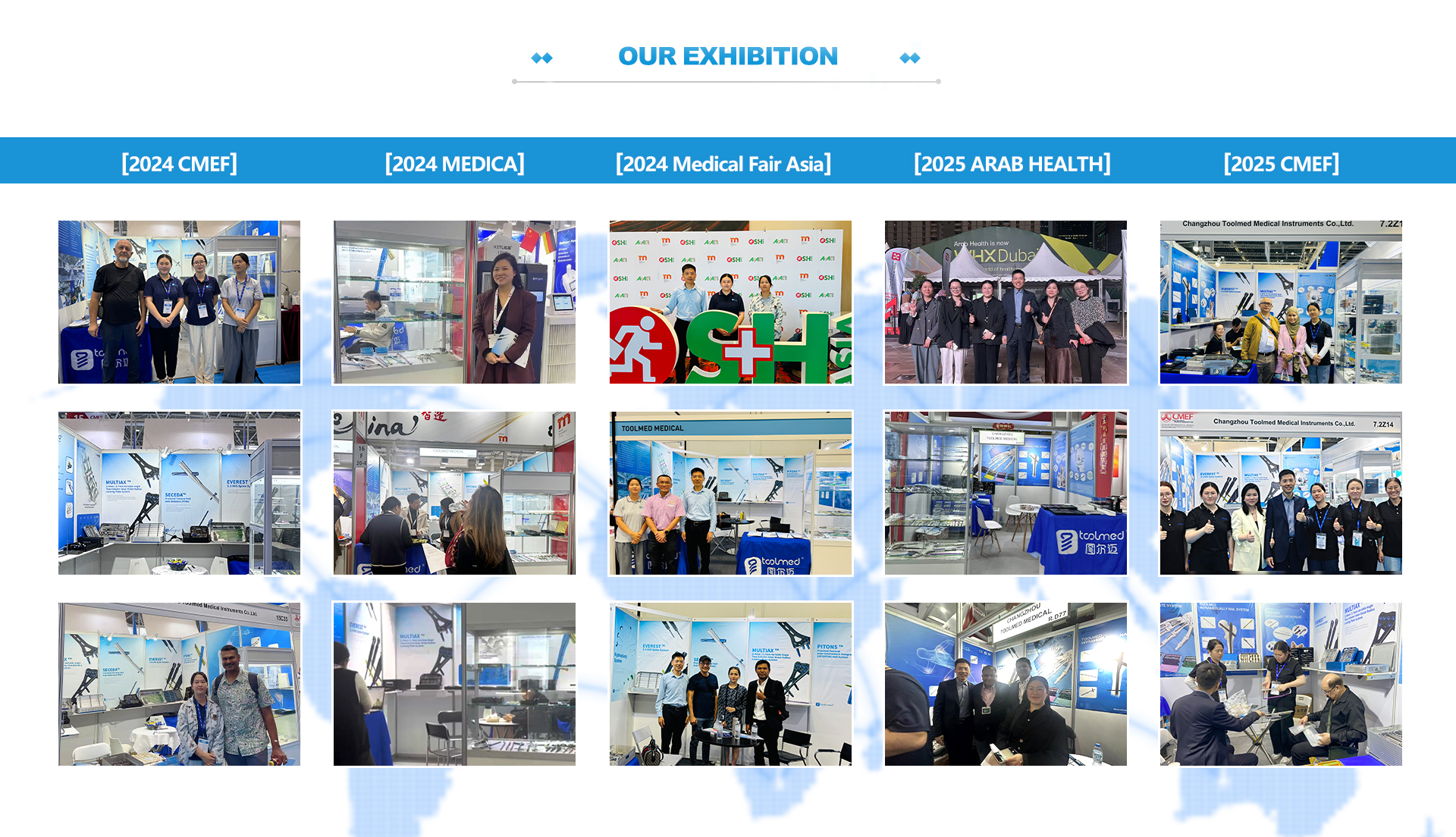
We offer fast and reliable global shipping. Standard lead times range from 7 to 15 working days, depending on order quantity and customization requirements. Express delivery options are also available upon request.
Yes, we ship to most countries worldwide. We work with trusted logistics partners to ensure timely and secure delivery.
We accept a variety of payment options, including T/T (bank transfer), L/C, and PayPal for smaller orders. Payment terms can be discussed based on order volume and partnership agreements.
Yes, samples are available for evaluation. Please contact our sales team to request product samples and shipping arrangements.
Absolutely. We offer OEM/ODM services including custom packaging, branding, and product development tailored to your specifications.


