
 |
3303-0801
TOOLMED
TA3
1 Pcs
5-15 Days
/
Product Description
Designed to fit the unique "watershed line" of the distal radius, minimizing flexor tendon irritation and ensuring an optimal volar buttress against collapse.
The included guide docks precisely onto the plate, ensuring all locking screws are drilled and inserted at the exact fixed angle, guaranteeing the fixed-angle stability of the construct.
Features an array of screw holes strategically placed to support the joint surface fragments, creating a strong scaffold that prevents articular depression.
The head is tapered and low-profile to reduce the risk of soft tissue impingement, which is critical given the proximity to the flexor tendons and median nerve.
Primary indication for AO/OTA Type A2, A3, B3, C1, and C2 fractures that require rigid volar buttressing to maintain reduction.
Used to stabilize dorsally displaced fractures, where the volar plate effectively prevents shortening and dorsal collapse.
Recommended for geriatric or osteoporotic patients, as the fixed-angle construct provides stability independent of the quality of the surrounding bone stock.
| Product Name | Distal Volar Radial Locking Plate With Drill Guide |
| Material | TA3 |
| Certificate | CE Certificate |
| Brand | TOOLMED |
| MOQ | 1 Pcs |
| OEM | Avaliable |
| Package | PE Inner Bag+Carton |
| Payment Method | T/T,Bank transfer, Western Union |
| Delivery Time | 5-15 Days |
| Shipping | DHL EMS UPS TNT FEDEX |

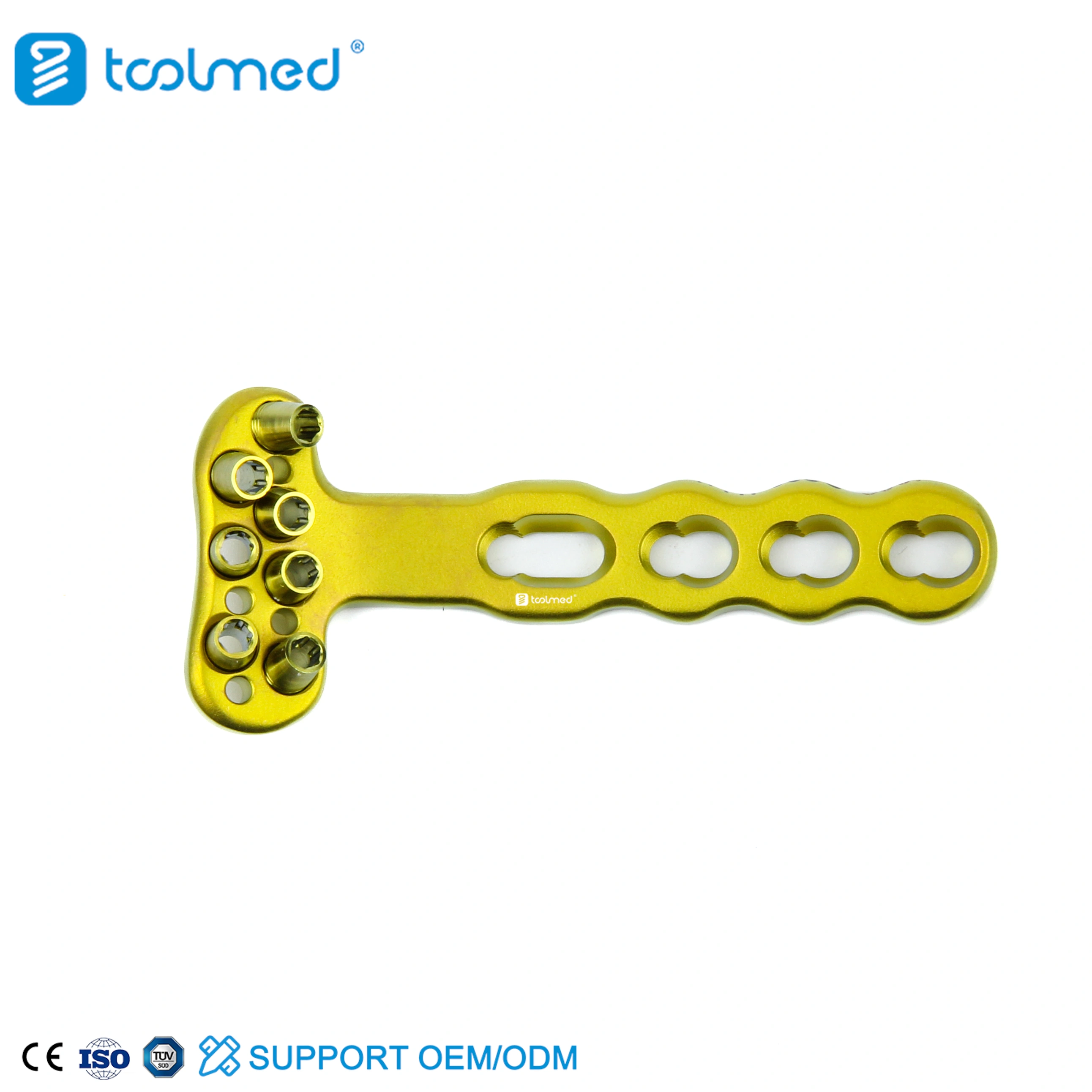
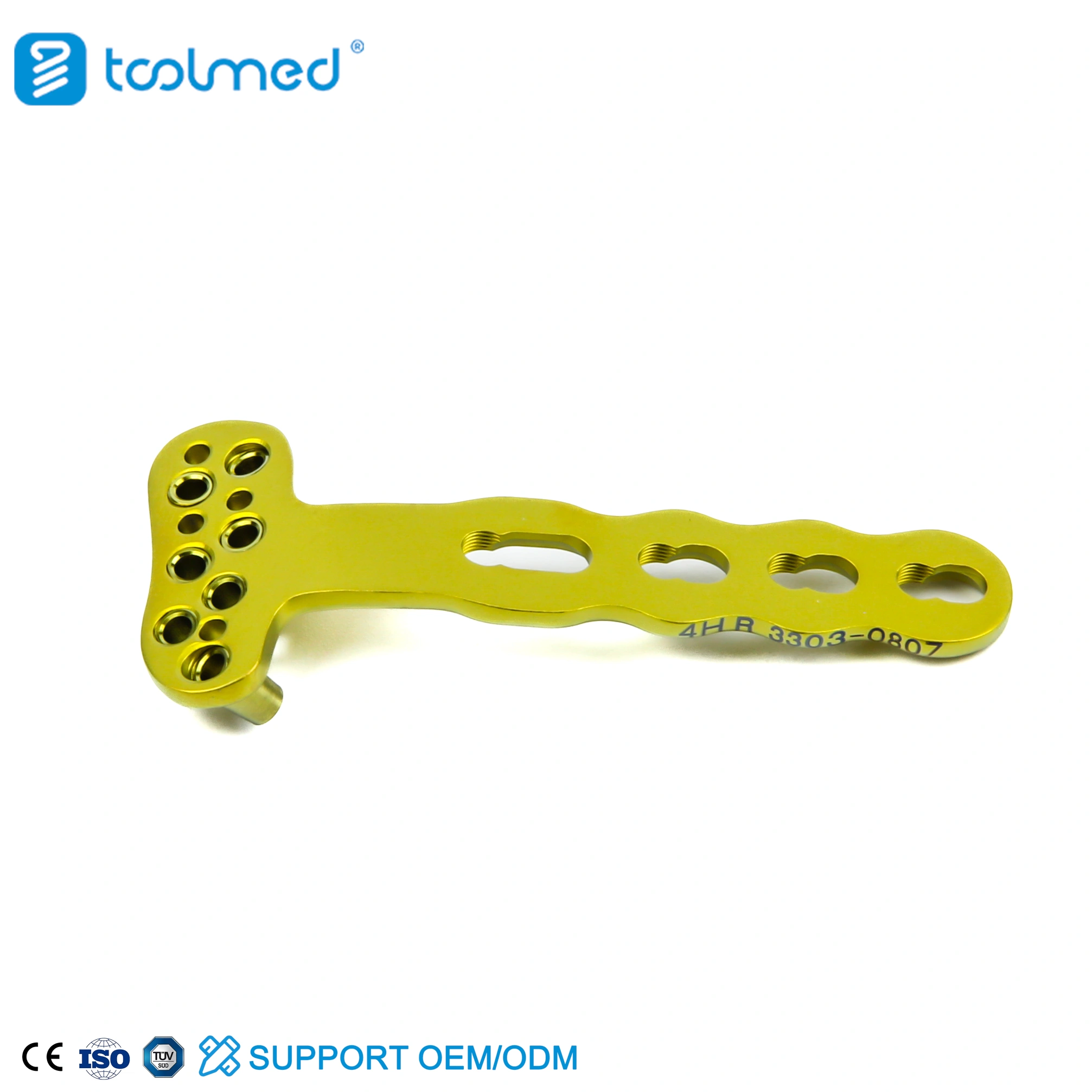
This is a titanium plate and surgical guidance tool package for fixing broken wrist bones (distal radius) from the front (volar) side. The locking plate holds the bone rigidly, and the drill guide is a device that clips onto the plate, ensuring the drill bit, and subsequently the locking screw, enters the bone at the exact correct angle. This precision is vital for fixed-angle stability and preventing joint damage.
The drill guide is a standard safety and accuracy tool used with all fixed-angle locking plates. Its application ensures that the screws perfectly engage the threads in the plate, thereby creating the rigid, internal fixator needed to hold the reduced fracture, especially when the fracture is close to the articular surface.
The main advantage is procedural safety and speed. By guaranteeing the correct angle, the guide prevents the surgeon from accidentally drilling or inserting a screw into the joint space (a major risk). It also simplifies and accelerates the insertion of multiple fixed-angle screws, improving surgical efficiency and consistency.
The plate provides the fixed structural support (the buttress), and the guide ensures the screw trajectories are biomechanically optimized for that support. This means the scaffolding of screws beneath the joint surface is perfectly aligned to resist the axial compressive forces of the hand, ensuring the healing bone is not subjected to unwanted strain.
After reducing the fracture, the plate is placed on the volar side of the radius. The drill guide is temporarily attached to the plate holes. The surgeon drills through the guide, guaranteeing the correct trajectory. Once the drilling and tapping (if required) are complete, the locking screw is inserted into the perfectly created pathway.
The rigid stability achieved with the plate and guide system allows patients to begin early range of motion exercises, often immediately post-surgery or within the first week. This accelerated rehabilitation is crucial for preventing wrist stiffness and achieving a fast return to daily activities.
The Distal Volar Radial Locking Plate With Drill Guide is a gold-standard system for treating distal radius fractures. The combination of an anatomically contoured plate and a precise drill guide ensures highly accurate, fixed-angle fixation, which is the cornerstone of modern wrist trauma surgery.
The drill guide is typically a reusable surgical instrument made of stainless steel or high-grade polymer, designed for sterilization and use in multiple procedures. It is not part of the implant that stays in the body.
The volar approach is often preferred because it allows the surgeon to visualize and support the volar side, which is the concave side of the radius and the area most prone to collapse in common (Colles') fractures.
Yes, the plate is available in various lengths (e.g., 4-hole, 6-hole, 8-hole) to accommodate different fracture patterns and patient anatomies.
No, the specialized drill guide is designed only for the fixed trajectory of the locking screws. Standard cortical (non-locking) screws are placed using a dynamic drill guide for compression, often in the shaft combi-holes.
The watershed line is a subtle ridge on the volar distal radius. The plate is designed to sit proximal (behind) this line to prevent the plate's head from irritating or rupturing the adjacent flexor tendons. Correct positioning is critical.
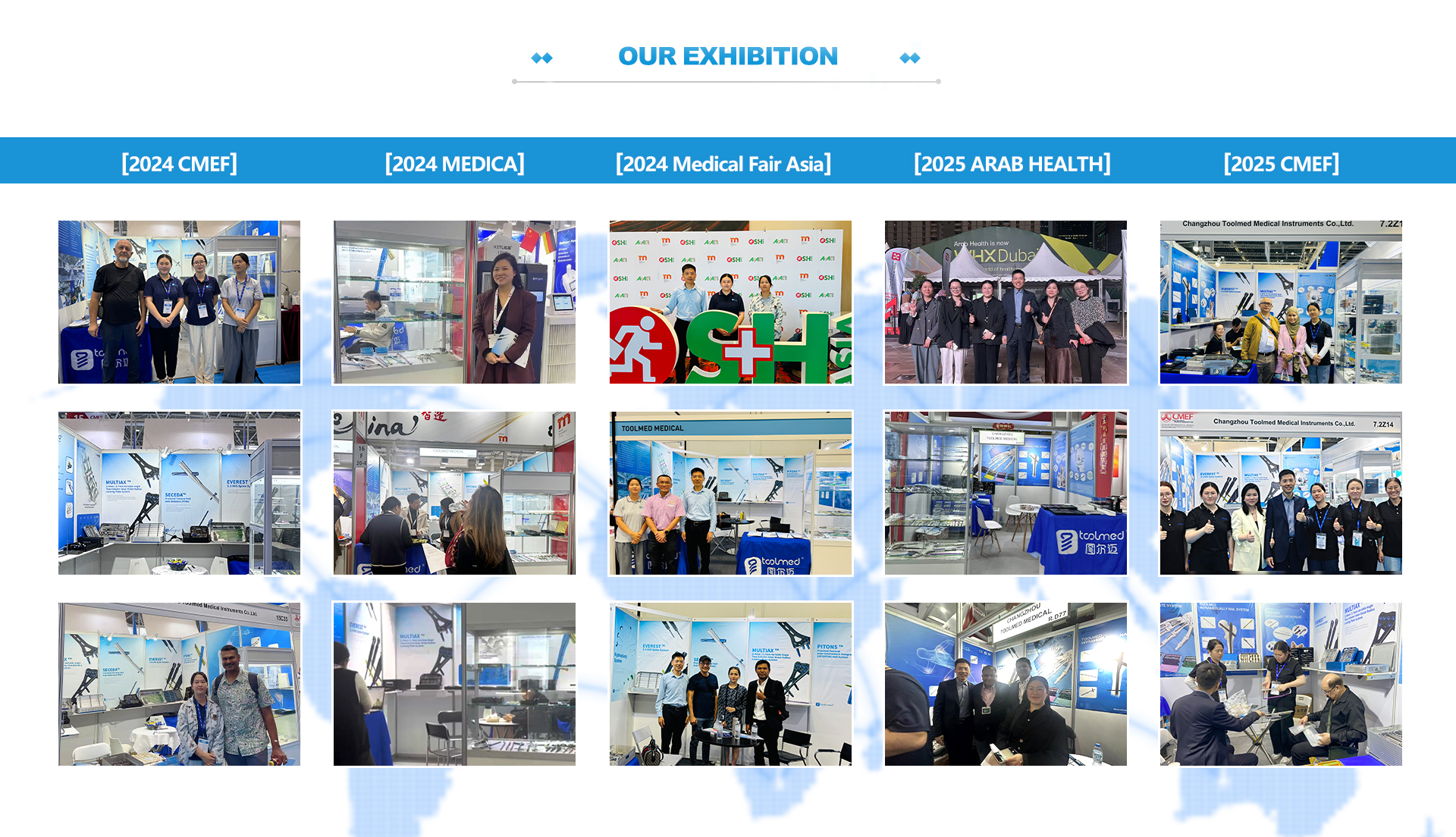
Our factory is equipped with over 60 advanced CNC machines operated by 100+ skilled technicians, a 300 m² GMP-compliant clean room, and a 10,000 m² production facility. We maintain a CNAS and ISO 17025 certified testing center, invest heavily in CNC turning technology, and utilize high-precision inspection systems including CMM, PP, and QV to ensure product quality and consistency.
We offer fast and reliable global shipping. Standard lead times range from 7 to 15 working days, depending on order quantity and customization requirements. Express delivery options are also available upon request.
Yes, we ship to most countries worldwide. We work with trusted logistics partners to ensure timely and secure delivery.
We accept a variety of payment options, including T/T (bank transfer), L/C, and PayPal for smaller orders. Payment terms can be discussed based on order volume and partnership agreements.
Yes, samples are available for evaluation. Please contact our sales team to request product samples and shipping arrangements.
Absolutely. We offer OEM/ODM services including custom packaging, branding, and product development tailored to your specifications.


