
 |
3302-0601
TOOLMED
TA3
1 Pcs
5-15 Days
/
Product Description
Precisely contoured to the medial supracondylar ridge, providing a powerful buttress for the medial fragments and resisting the forces that cause secondary fracture displacement.
The distal screw holes are strategically placed to drive fixed-angle locking screws into the trochlea and medial condyle fragments, crucial for anatomical joint surface reconstruction.
The design is thin and smooth to minimize the risk of irritation to surrounding soft tissues, with an emphasis on its placement relative to the adjacent ulnar nerve.
Engineered to work seamlessly with a corresponding lateral column plate, ensuring a biomechanically superior, stable, two-column construct for the most complex fractures.
Essential component of the dual-plate fixation for comminuted T-type, Y-type, and H-type fractures involving the elbow joint (AO/OTA Type C).
Used to stabilize displaced fractures of the medial condyle, which often require strong tension-side fixation.
Indicated whenever the integrity of the medial column is lost, as restoring this pillar is critical for maintaining the correct relationship between the ulna and humerus.

| Product Name | Distal Medial Humeral Locking Plate |
| Material | TA3 |
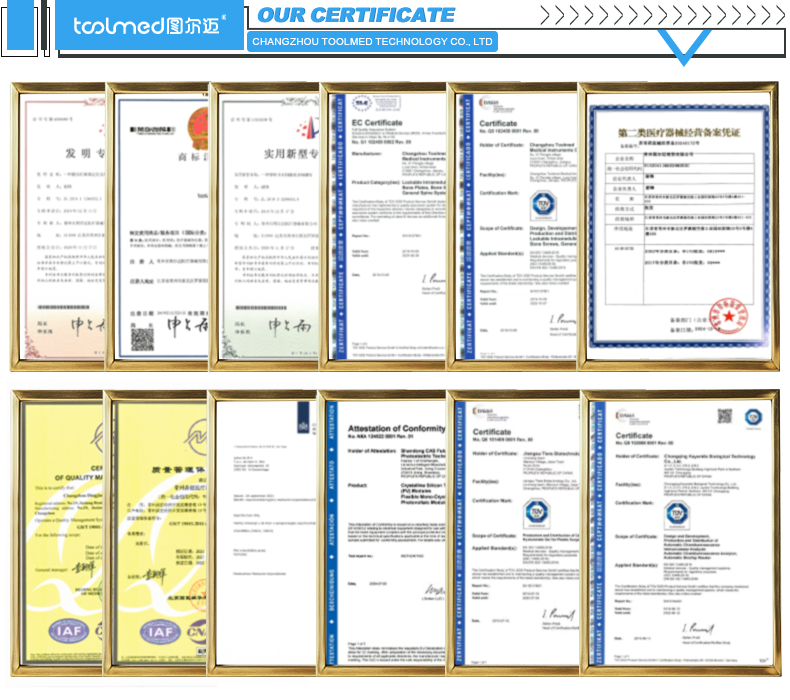
| Certificate | CE Certificate |
| Brand | TOOLMED |
| MOQ | 1 Pcs |
| OEM | Avaliable |
| Package | PE Inner Bag+Carton |
| Payment Method | T/T,Bank transfer, Western Union |
| Delivery Time | 5-15 Days |
| Shipping | DHL EMS UPS TNT FEDEX |


This is a specialized titanium plate used to fix severe breaks in the elbow joint by securing the bone on the medial (inner) side of the humerus. In complex elbow fractures, the bone splits into two "columns." This plate is dedicated to fixing the medial column, which includes the medial condyle and the trochlea (the joint surface interacting with the ulna). It is always used alongside a lateral plate to create a highly stable, dual-column structure for the elbow joint.
This plate is essential for all complex intra-articular distal humerus fractures (T-type, Y-type). Fixing the medial column is vital because it is the primary support structure for the ulna (forearm bone) and houses the sensitive ulnar nerve, which must be carefully managed during surgery.
The primary advantage is rigid support for the medial pillar. The locking screws provide superior resistance to pull-out and collapse compared to traditional screws, ensuring the small articular fragments stay in place. This high stability is essential for counteracting muscle forces and allowing the entire dual-plated construct to facilitate early post-operative motion.
Biomechanically, this plate acts as the crucial tension-side buttress for the medial column. When used in conjunction with a lateral plate (in a perpendicular, or orthogonal, orientation), the two plates create a powerful triangulation effect that resists all bending, torsional, and compressive loads, which is the strongest way to stabilize a distal humeral fracture.
Surgery is typically performed through a posterior approach. The Ulnar Nerve is identified, protected, and often gently moved (transposed) to keep it safe during the plating process. Once the joint surface is reduced, the medial plate is applied to the medial column and secured with a combination of cortical and locking screws, working in coordination with the lateral plate fixation.
The robust stability provided by the dual-plating technique is designed to allow the patient to begin early range of motion therapy. Immediate, controlled mobilization is the key factor in preventing debilitating post-traumatic stiffness in the elbow joint.
The Distal Medial Humeral Locking Plate is indispensable for treating complex intra-articular elbow fractures. When paired with a lateral plate, it forms a superior fixation construct, ensuring anatomical joint restoration, maximum stability, and the best opportunity for a full functional recovery.
The ulnar nerve runs directly adjacent to the medial column. It must be carefully protected throughout the surgery. Surgeons often move (transpose) the nerve temporarily to prevent irritation from the implant or scarring.
Both methods use medial and lateral plates. Orthogonal (or perpendicular) plating uses the plates at right angles (medial plate on the medial side, lateral plate on the posterior side). Parallel plating uses both plates on the posterior side, parallel to each other. Both are considered biomechanically stable for these fractures.
Yes, like most anatomical plates, it is available in specific left and right versions to match the anatomy of the medial supracondylar ridge precisely.
When the arm is extended, the medial column often experiences higher tensile stress compared to the lateral column in many loading situations. The medial plate acts as a tension band to counteract this force.
Yes, the plate includes combination holes in the shaft, allowing the surgeon to use standard cortical screws to achieve compression of simple fracture lines before securing the final construct with locking screws.
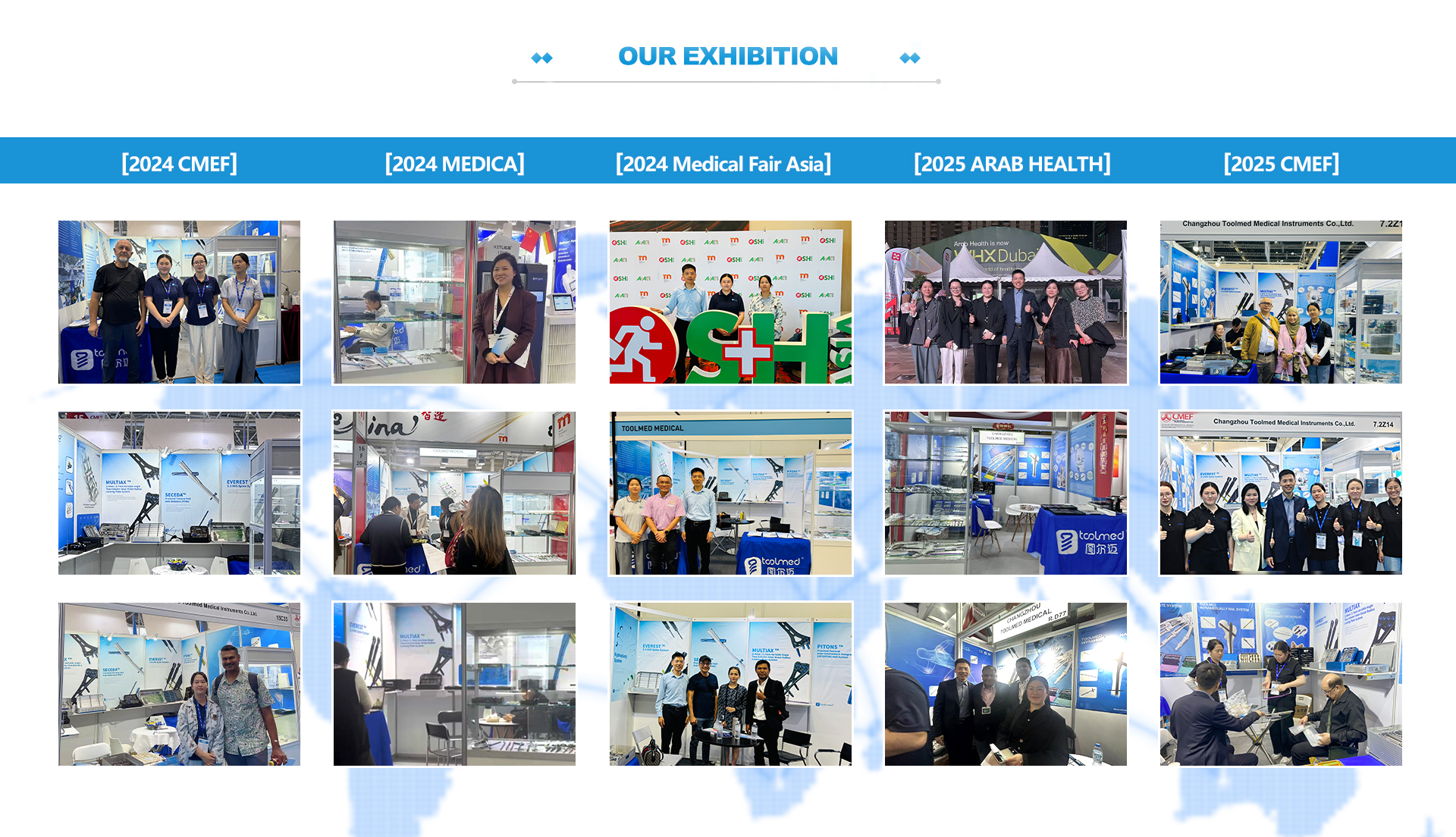
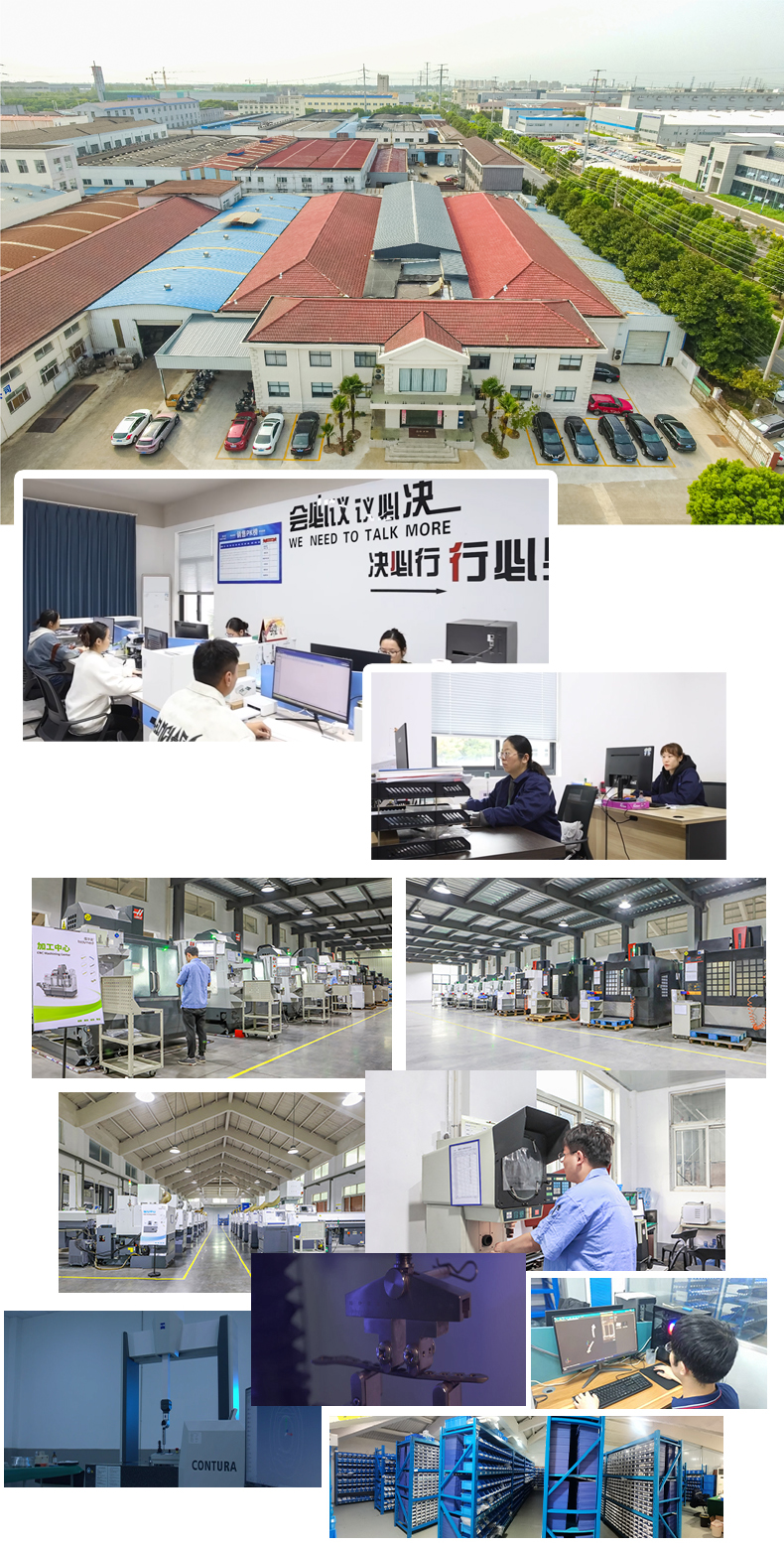
Our factory is equipped with over 60 advanced CNC machines operated by 100+ skilled technicians, a 300 m² GMP-compliant clean room, and a 10,000 m² production facility. We maintain a CNAS and ISO 17025 certified testing center, invest heavily in CNC turning technology, and utilize high-precision inspection systems including CMM, PP, and QV to ensure product quality and consistency.
We offer fast and reliable global shipping. Standard lead times range from 7 to 15 working days, depending on order quantity and customization requirements. Express delivery options are also available upon request.
Yes, we ship to most countries worldwide. We work with trusted logistics partners to ensure timely and secure delivery.
We accept a variety of payment options, including T/T (bank transfer), L/C, and PayPal for smaller orders. Payment terms can be discussed based on order volume and partnership agreements.
Yes, samples are available for evaluation. Please contact our sales team to request product samples and shipping arrangements.
Absolutely. We offer OEM/ODM services including custom packaging, branding, and product development tailored to your specifications.


