
 |
3309-1001
TOOLMED
TA3
1 Pcs
5-15 Days
/
Product Description
The plate is precision-engineered with an anatomical twist that follows the natural transition from the tibial shaft to the lateral malleolar area, ensuring a flush fit against the distal lateral cortex.
The distal head incorporates multiple locking screw holes with diverging and converging trajectories to maximize bone purchase in the small fragments of the distal tibial epiphysis.
Given the minimal soft tissue coverage at the ankle, the plate features ultra-thin edges and a smooth, polished surface to prevent irritation of the peroneal tendons and overlying skin.
The scalloped design of the plate underside reduces contact with the periosteum, preserving the local blood supply to the bone and promoting faster biological healing.
Primary indication for complex intra-articular fractures where lateral column support is required to restore the ankle joint surface.
Used for extra-articular fractures of the distal third of the tibia where traditional intramedullary nailing may not be suitable.
Indicated for corrective osteotomies or salvage procedures of the distal tibia following failed primary healing.
Used to stabilize fractures occurring around total ankle replacements where rigid, fixed-angle fixation is mandatory.
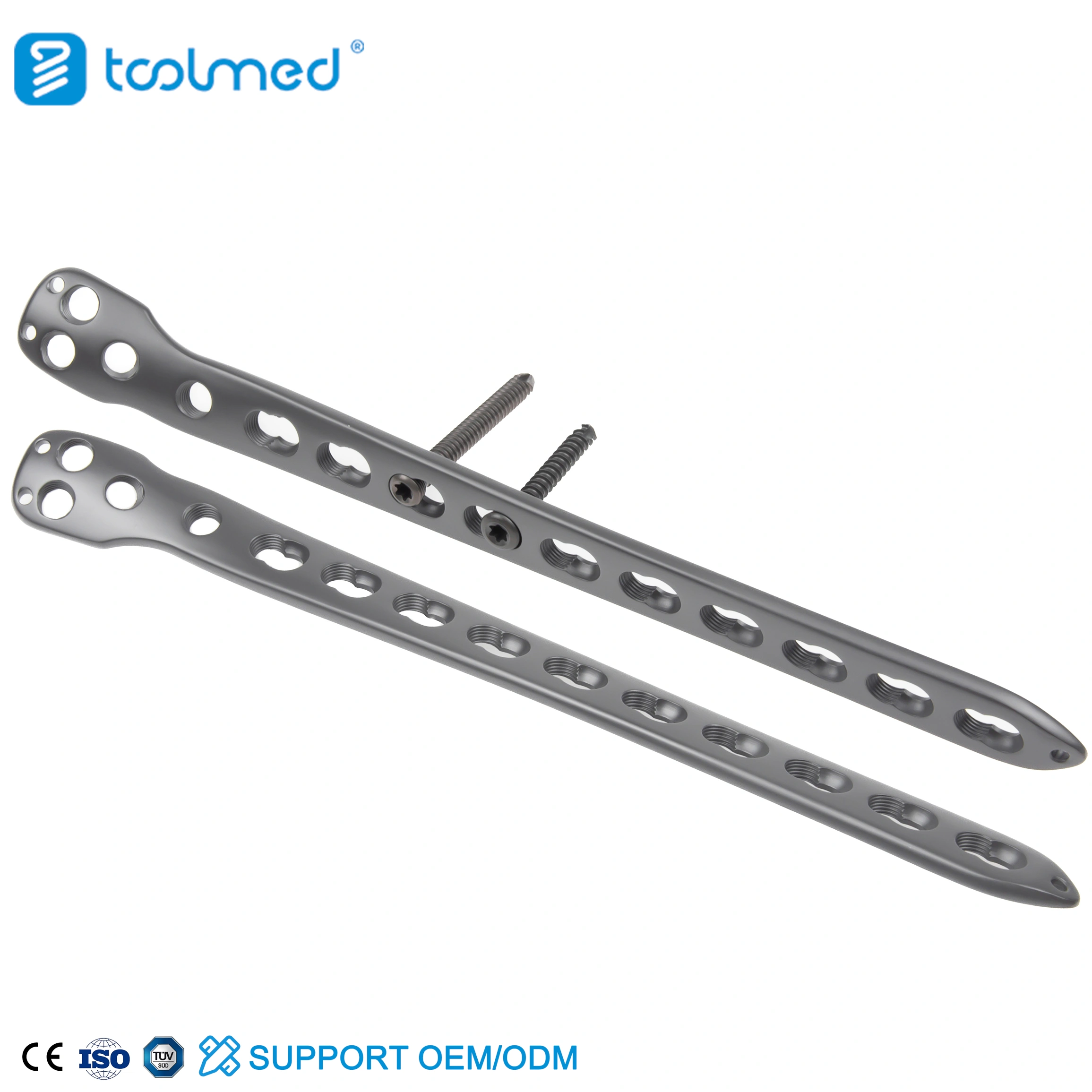
| Product Name | Distal Lateral Tibial Locking Plate-I |
| Material | TA3 |
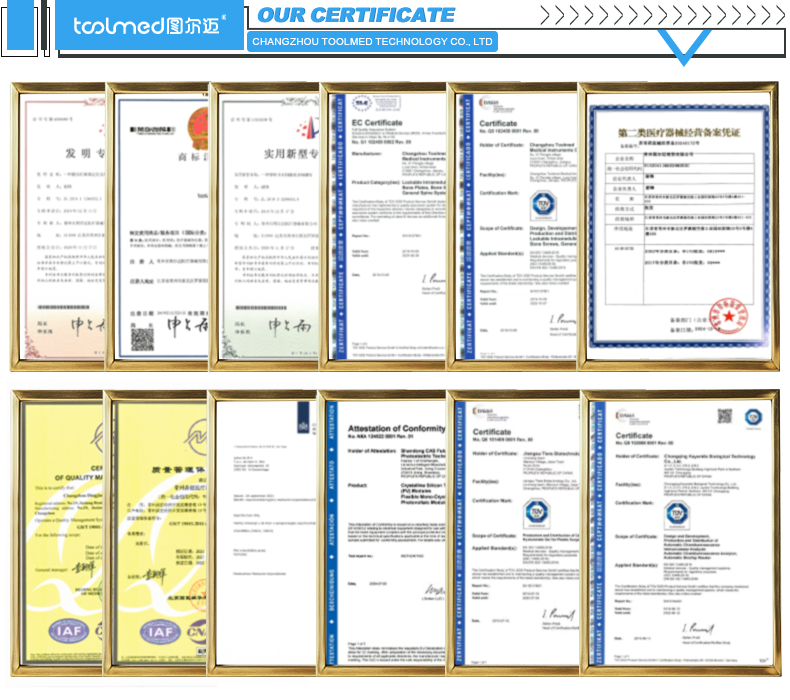
| Certificate | CE Certificate |
| Brand | TOOLMED |
| MOQ | 1 Pcs |
| OEM | Avaliable |
| Package | PE Inner Bag+Carton |
| Payment Method | T/T,Bank transfer, Western Union |
| Delivery Time | 5-15 Days |
| Shipping | DHL EMS UPS TNT FEDEX |

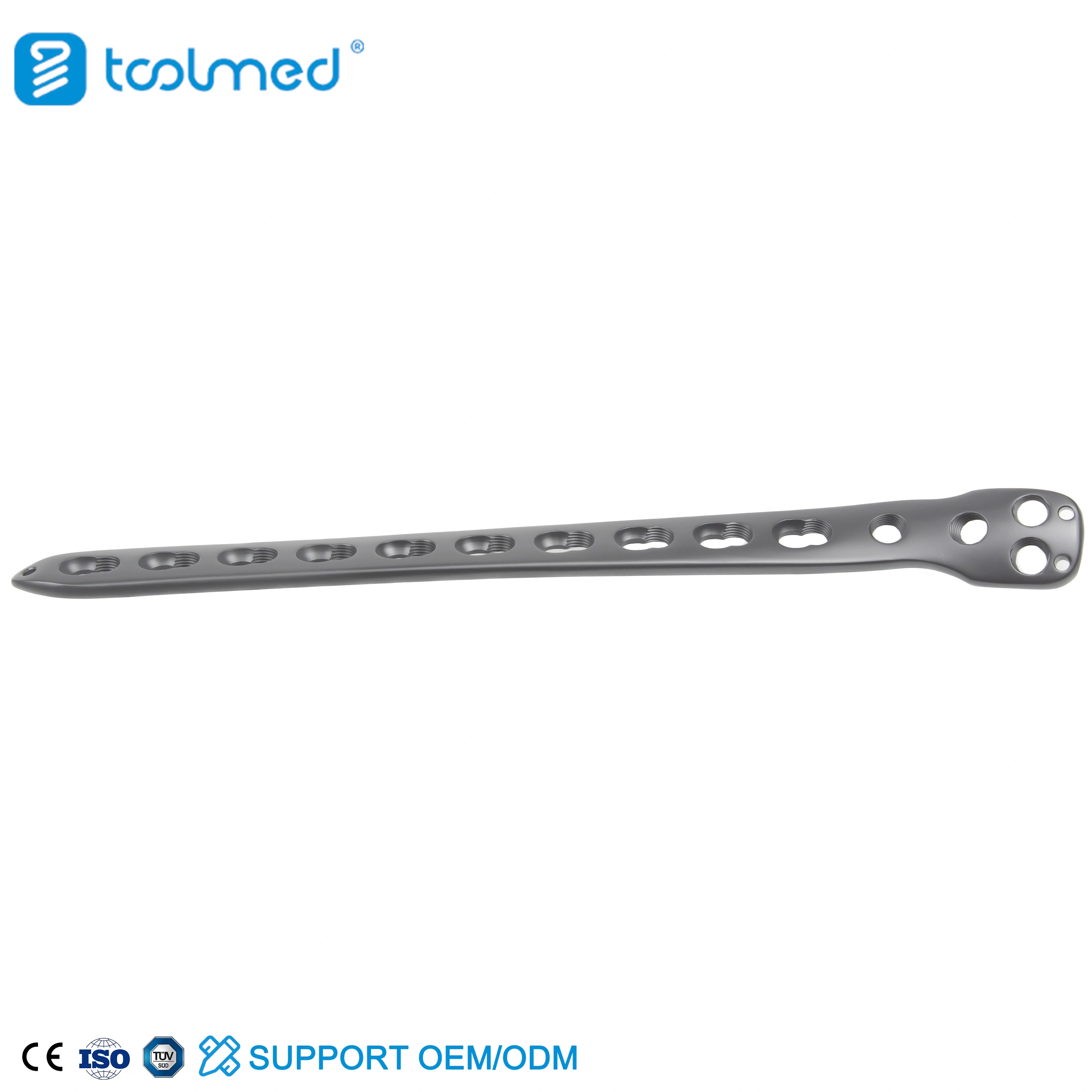
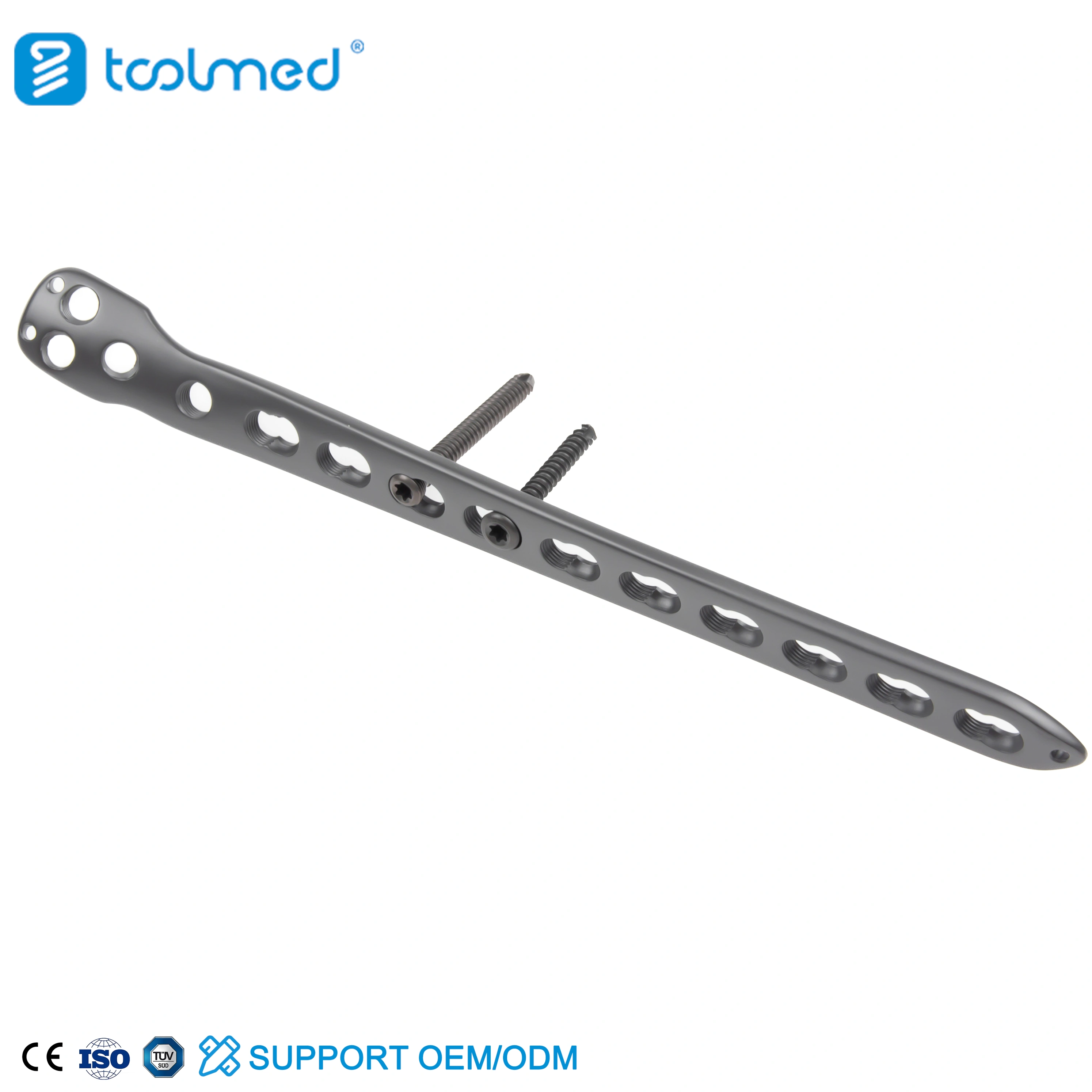
This is a titanium plate used to fix severe breaks at the bottom of the shinbone (tibia) near the ankle. These injuries, often called Pilon fractures, are very serious because they involve the joint surface that allows you to walk. This plate is placed on the lateral (outer) side of the bone. It acts as an "internal splint," using locking screws to hold the broken pieces of the joint together in their exact original position.
The lateral plate is often used when the fracture is on the outer side of the tibia or when the surgeon needs to fix both the tibia and the fibula through a similar approach. Because the ankle is a high-pressure joint, the plate must be strong enough to hold the bone fragments perfectly still so they can fuse back into a smooth surface.
The Locking technology is the greatest advantage. In the distal tibia, the bone is often thin or hard (cortical). Traditional screws can sometimes lose their grip. Locking screws "bolt" into the plate, creating a rigid frame that doesn't rely on the bone's thickness for strength. This is vital for maintaining the height and angle of the ankle joint throughout the months of healing.
Biomechanically, the plate functions as a tension band or buttress. It resists the forces that try to shorten or tilt the ankle joint fragments. By stabilizing the lateral side, the plate ensures the weight of the body is distributed evenly across the ankle joint, preventing lopsided wear that leads to arthritis.
The surgeon usually makes an incision on the outer side of the ankle. The bone fragments are carefully realigned using special tools and checked with an X-ray machine. The plate is then positioned against the bone. Small 3.5mm screws are used to "lock" the joint pieces to the plate, and then the rest of the plate is secured to the main shaft of the bone.
Because the ankle is a complex joint, you will likely be in a cast or a boot for several weeks and told not to put weight on the leg. However, because the TOOLMED locking plate is so stable, your surgeon may let you start moving your ankle joint early (passive range of motion). This helps prevent the ankle from becoming permanently stiff.
The Distal Lateral Tibial Locking Plate-I is a critical tool for preserving ankle function after a major injury. Its anatomical fit and fixed-angle stability provide the mechanical environment necessary for the bone to heal correctly, giving patients the best chance to walk again without pain.
A Pilon fracture is a high-energy break at the very bottom of the tibia that involves the joint surface of the ankle. It is usually caused by a fall from a height or a car accident. These fractures almost always require a locking plate for successful treatment.
The ankle has very little "padding." While the Distal Lateral Plate-I is designed to be very thin (low-profile), you might feel the heads of the screws or the edge of the plate if you touch the outside of your ankle. It is generally not painful.
Depending on how many pieces the bone is in, the surgery usually takes between 1 and 3 hours. The goal is to perfectly restore the joint surface, which takes great precision.
Most patients start "partial weight-bearing" at 6 to 10 weeks, and "full weight-bearing" at 3 to 4 months, once the X-rays show the bone has fully bridged the fracture.
It’s not better or worse—it’s just for a different side. Some fractures are on the inner side (requiring a medial plate), some are on the outer side (lateral plate), and some are so severe they require both to be fixed correctly.
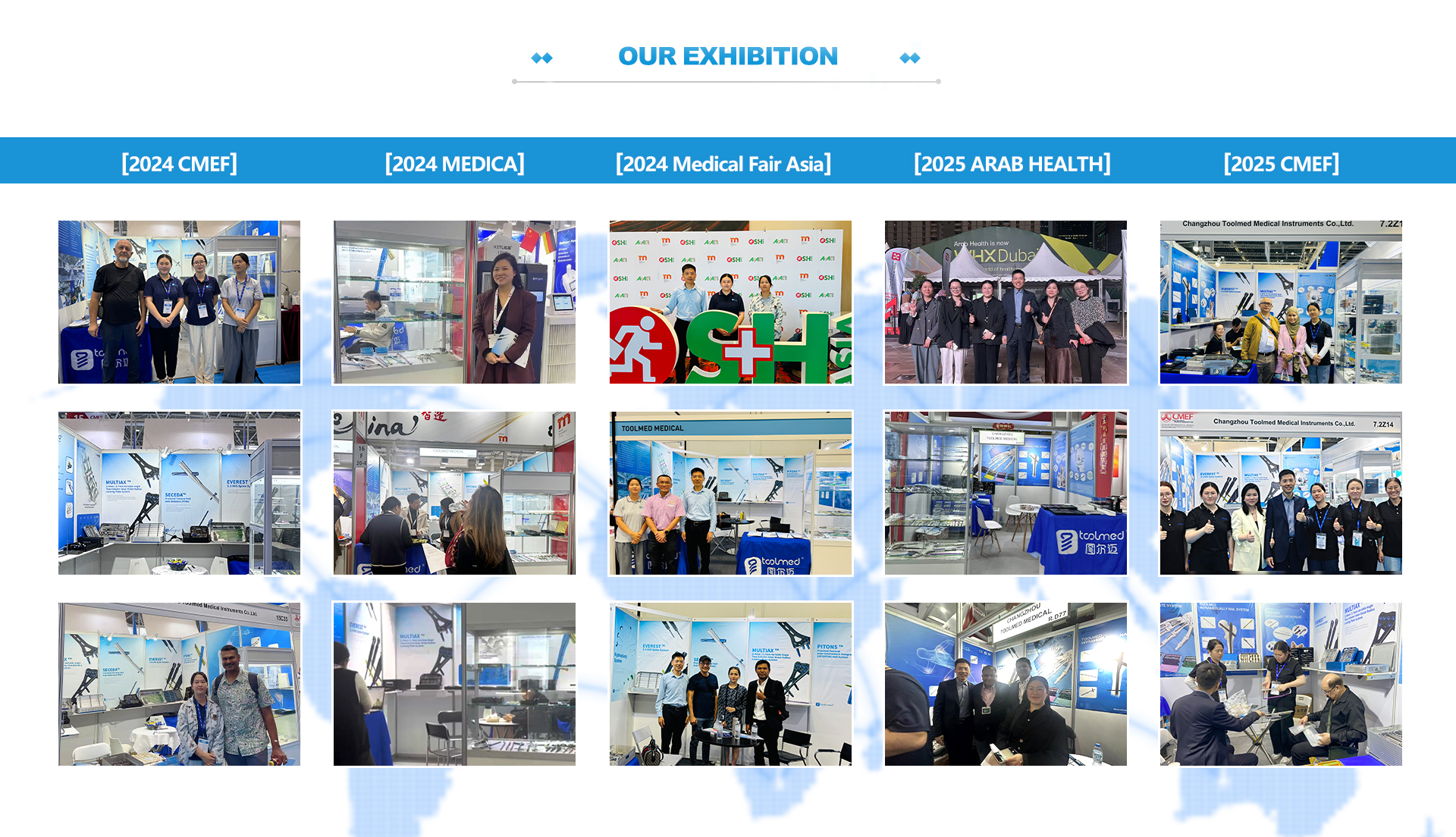
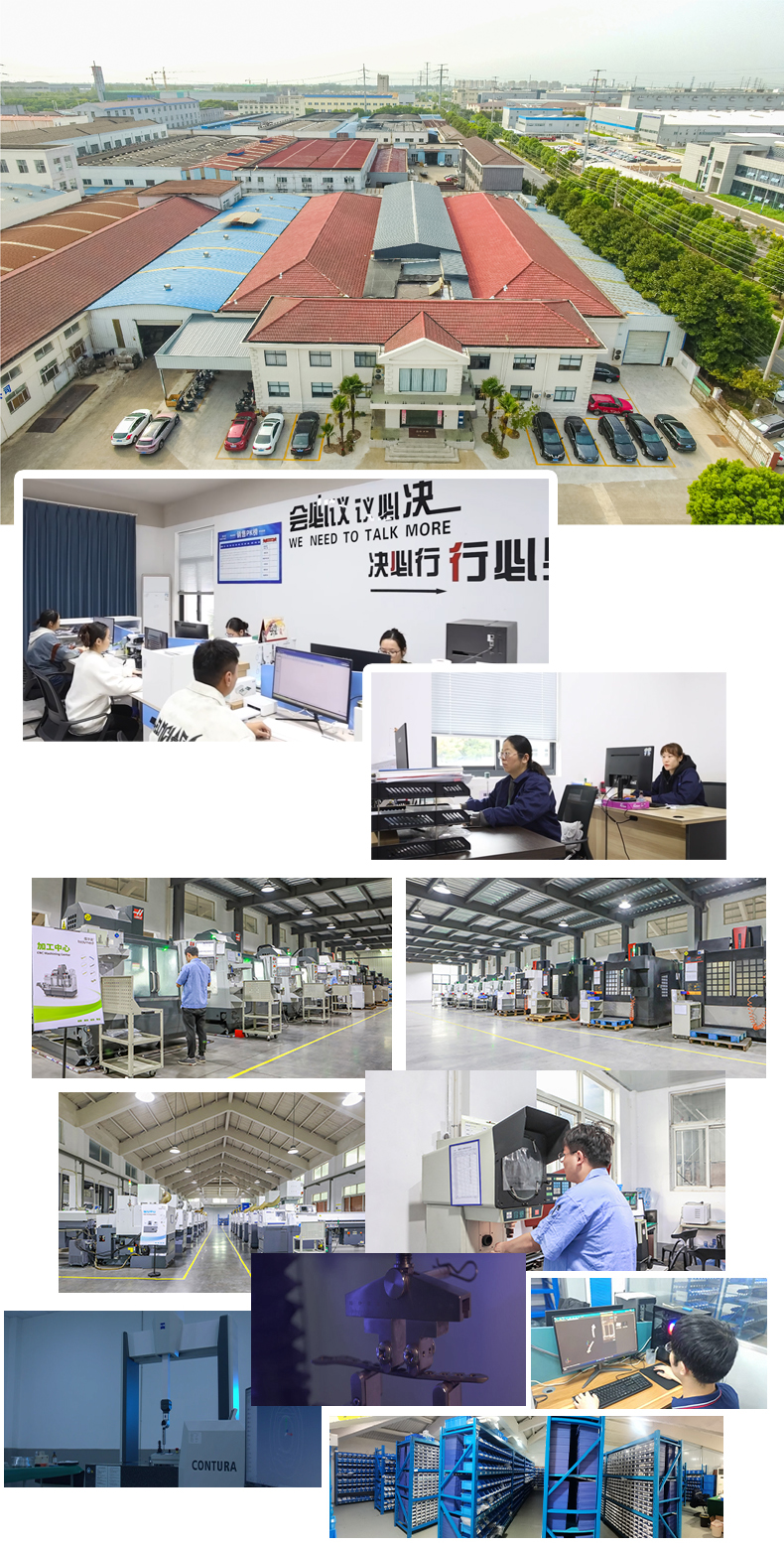
Our factory is equipped with over 60 advanced CNC machines operated by 100+ skilled technicians, a 300 m² GMP-compliant clean room, and a 10,000 m² production facility. We maintain a CNAS and ISO 17025 certified testing center, invest heavily in CNC turning technology, and utilize high-precision inspection systems including CMM, PP, and QV to ensure product quality and consistency.
We offer fast and reliable global shipping. Standard lead times range from 7 to 15 working days, depending on order quantity and customization requirements. Express delivery options are also available upon request.
Yes, we ship to most countries worldwide. We work with trusted logistics partners to ensure timely and secure delivery.
We accept a variety of payment options, including T/T (bank transfer), L/C, and PayPal for smaller orders. Payment terms can be discussed based on order volume and partnership agreements.
Yes, samples are available for evaluation. Please contact our sales team to request product samples and shipping arrangements.
Absolutely. We offer OEM/ODM services including custom packaging, branding, and product development tailored to your specifications.


