
 |
3306-0201
TOOLMED
TA3
1 Pcs
5-15 Days
/
Product Description
Precisely pre-shaped to match the lateral supracondylar ridge and condyle of the distal femur, providing an ideal anatomical fit that reduces the need for intraoperative plate contouring.
The distal head features multiple locking screw holes that create a fixed-angle "raft," providing superior stability in the distal fragments and ensuring the correction angle remains unchanged under load.
The lateral side of the femur is covered by the iliotibial (IT) band; this plate is designed with ultra-low profile edges and smooth surfaces to prevent IT band friction and postoperative discomfort.
The shaft incorporates combination holes, allowing for the use of standard 4.5mm cortical screws for initial compression or plate positioning, and 5.0mm locking screws for final rigid fixation.
Primary indication for lateral opening wedge or lateral closing wedge osteotomies to correct bow-legged alignment originating in the distal femur.
Used for corrective osteotomy of the distal femur following malaligned healing of previous fractures.
Indicated for joint preservation in active patients where unloading the medial compartment via femoral realignment is clinically necessary.

| Product Name | Distal Lateral Femoral Osteotomy Locking Plate |
| Material | TA3 |
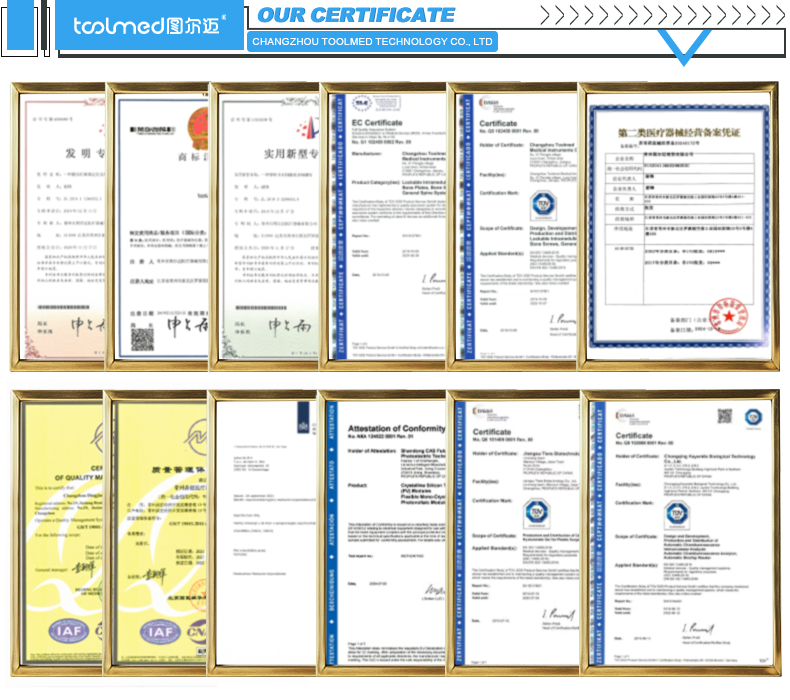
| Certificate | CE Certificate |
| Brand | TOOLMED |
| MOQ | 1 Pcs |
| OEM | Avaliable |
| Package | PE Inner Bag+Carton |
| Payment Method | T/T,Bank transfer, Western Union |
| Delivery Time | 5-15 Days |
| Shipping | DHL EMS UPS TNT FEDEX |


This is a specialized titanium plate used to secure the thigh bone (femur) after it has been surgically realigned to treat "bow-legged" (varus) knees. When the femur tilts inward, it puts too much pressure on the inner (medial) part of the knee joint. This plate is placed on the lateral (outer) side of the femur to hold the bone in its new, corrected position. It uses powerful locking screws to ensure the bone heals at the precise angle needed to straighten the leg.
The lateral plate is the primary choice for surgeons performing a Lateral Opening Wedge DFO. In this technique, a cut is made on the outside of the femur and "opened" to straighten the bone. The plate acts as the structural bridge across this gap, providing the strength required for the femur to carry the body's weight during the healing process.
The Locking technology is essential because the lateral femur is under significant tension during walking. A standard plate might allow the bone to shift, but a locking plate creates a rigid frame that doesn't rely on bone quality. This ensures that the millimetrically precise correction achieved in the operating room is maintained until the bone is fully fused.
Biomechanically, the lateral plate often functions as a tension band or a buttress. It resists the forces that would otherwise cause the osteotomy to close or shift. By stabilizing the lateral side, the plate enables the mechanical axis of the leg to be moved outward, immediately relieving the pain and pressure in the inner knee joint.
The procedure is performed through a lateral incision. After the bone is cut and the wedge is opened to the planned correction angle, the plate is positioned. The surgeon typically uses 5.0mm locking screws in the distal head to firmly anchor the plate to the knee joint fragment, then secures the shaft to finalize the stable construct.
Because the femur is the body's primary weight-bearing bone, a period of protected weight-bearing is required. However, the extreme rigidity of the locking plate allows patients to begin early knee range-of-motion exercises, which is critical for maintaining joint flexibility and preventing stiffness.
The Distal Lateral Femoral Osteotomy Locking Plate is an essential implant for the management of femoral varus deformities. Its anatomical lateral design and fixed-angle stability provide the mechanical security necessary for successful limb realignment, joint preservation, and long-term functional improvement.
The choice depends on the type of deformity. A lateral plate is typically used to correct Varus (bow-legged) deformities originating in the femur. Medial plates are more common for Valgus (knock-kneed) femoral correction.
The lateral distal femur is a sensitive area where the iliotibial (IT) band glides. TOOLMED plates are designed with an ultra-low profile and rounded edges specifically to minimize the risk of hardware irritation during knee movement.
Bone healing usually takes 8 to 12 weeks. While the plate provides immediate stability, patients typically use crutches for several weeks until X-rays show the bone has bridged the osteotomy site.
While primarily an osteotomy plate, its anatomical shape and locking capabilities are similar to trauma plates, and it may be used in specific corrective trauma cases where supracondylar malunion is present.
Titanium is generally preferred for its superior biocompatibility and a modulus of elasticity closer to bone, which helps reduce "stress shielding" and promotes more natural bone healing.
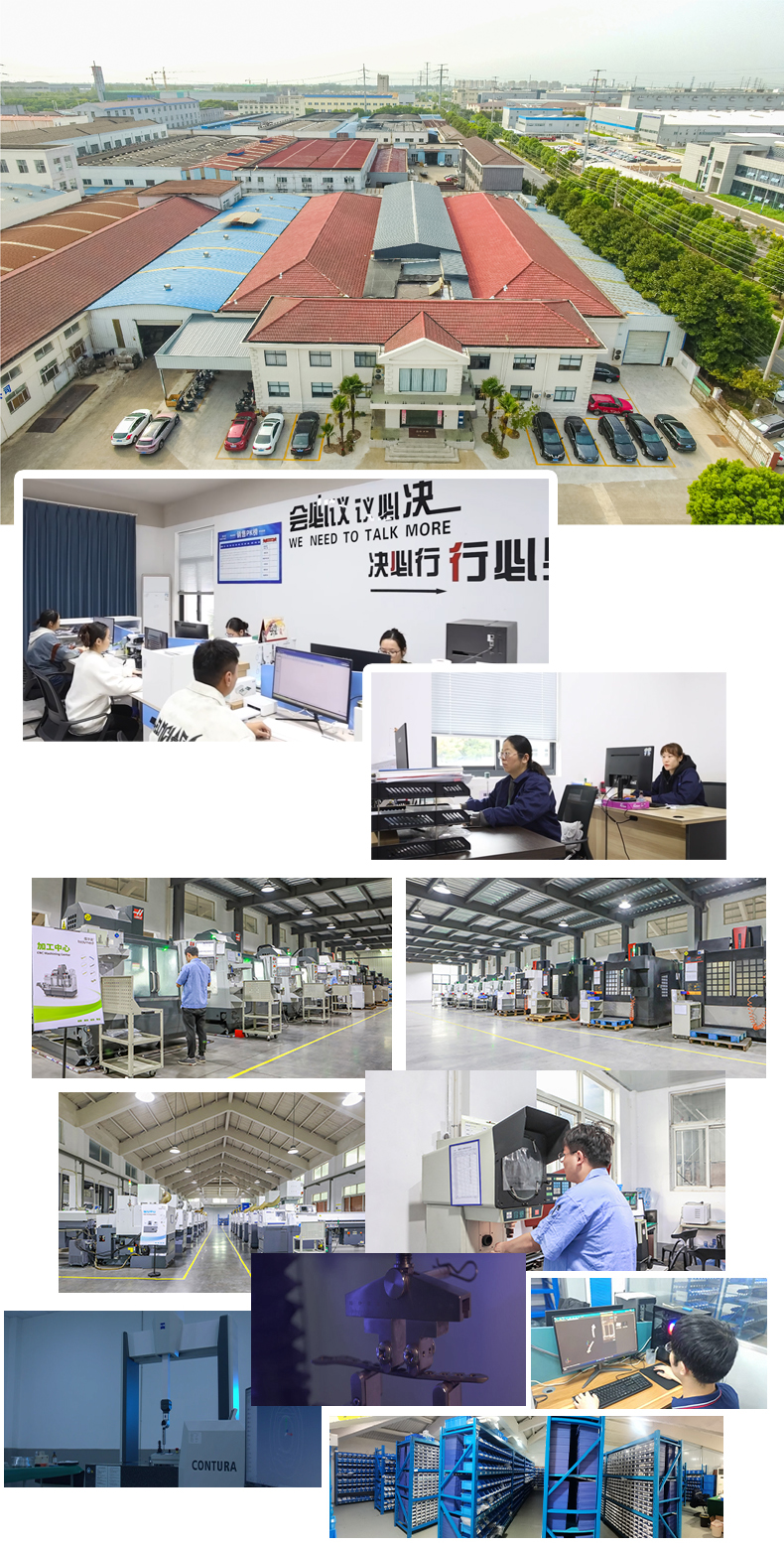
Our factory is equipped with over 60 advanced CNC machines operated by 100+ skilled technicians, a 300 m² GMP-compliant clean room, and a 10,000 m² production facility. We maintain a CNAS and ISO 17025 certified testing center, invest heavily in CNC turning technology, and utilize high-precision inspection systems including CMM, PP, and QV to ensure product quality and consistency.
We offer fast and reliable global shipping. Standard lead times range from 7 to 15 working days, depending on order quantity and customization requirements. Express delivery options are also available upon request.
Yes, we ship to most countries worldwide. We work with trusted logistics partners to ensure timely and secure delivery.
We accept a variety of payment options, including T/T (bank transfer), L/C, and PayPal for smaller orders. Payment terms can be discussed based on order volume and partnership agreements.
Yes, samples are available for evaluation. Please contact our sales team to request product samples and shipping arrangements.
Absolutely. We offer OEM/ODM services including custom packaging, branding, and product development tailored to your specifications.


