
 |
TOOLMED
TA3
1 Pcs
5-15 Days
/
Product Description
An even thinner plate profile, especially distally, significantly reduces the bulk of the hardware directly beneath the skin, making it ideal for patients with thin soft tissue coverage.
The contouring is optimized for the variability of the fibula, ensuring a near-perfect fit that facilitates accurate anatomical reduction and minimizes the need for intraoperative plate bending.
The locking screw angles are meticulously positioned to achieve maximum divergent purchase in the lateral malleolus fragment, creating a stronger fixed-angle construct compared to standard designs.
Retains the versatility of combination holes in the shaft for flexible use of lag screws for compression and locking screws for rigid neutralization.
Indicated for highly unstable or fragmented fractures requiring superior fixed-angle stability.
Essential for elderly patients where enhanced resistance to screw pull-out in fragile bone is critical for healing.
Used to stabilize the fibula in cases requiring syndesmotic reduction and potentially the use of syndesmotic screws.

| Product Name | Distal Fibular Locking Plate-II |
| Material | TA3 |
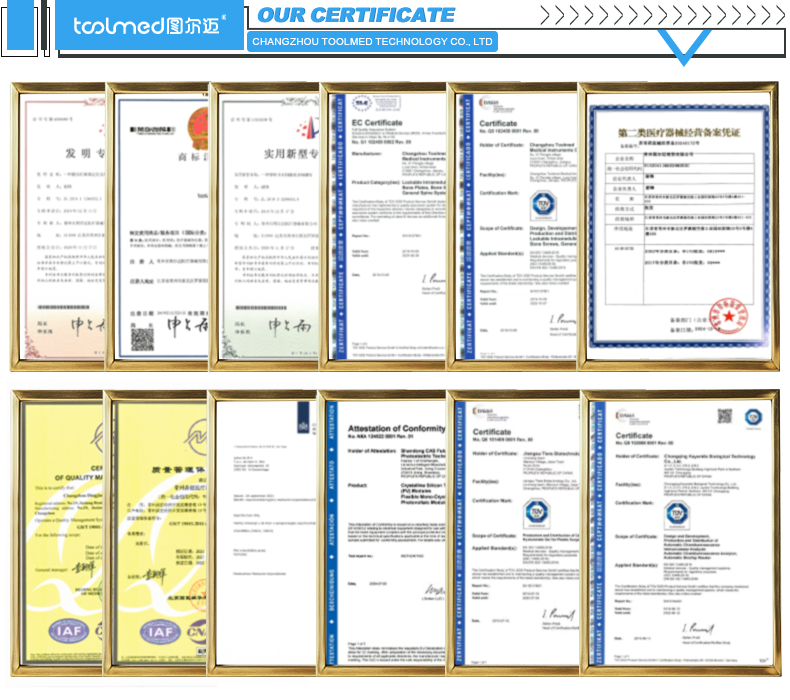
| Certificate | CE Certificate |
| Brand | TOOLMED |
| MOQ | 1 Pcs |
| OEM | Avaliable |
| Package | PE Inner Bag+Carton |
| Payment Method | T/T,Bank transfer, Western Union |
| Delivery Time | 5-15 Days |
| Shipping | DHL EMS UPS TNT FEDEX |


The Distal Fibular Locking Plate-II is an enhanced version of the standard ankle plate. While serving the same function—fixing breaks in the outer ankle bone (lateral malleolus)—it features specific engineering improvements. These typically include a more refined contour to better match the fibula's natural twist, and a significantly lower profile to minimize the hardware bump under the skin, which is often a source of discomfort in the ankle area.
The Plate-II design is preferred by surgeons for highly comminuted fractures or in patients with very thin soft tissue coverage over the fibula. The refined locking trajectories make it easier to achieve a strong, stable construct even with severely broken fragments, thus restoring the essential length and rotation of the fibula.
The primary advantage over previous generations is the reduced risk of hardware irritation, leading to lower hardware removal rates post-healing. The refined locking angle also provides a biomechanically superior buttress effect, which is critical when the ankle is subjected to high weight-bearing and torsional forces.
The fixed-angle construct maintains the reduction rigidly against the pulling forces of tendons and the compression forces of walking. The specific design of the Plate-II concentrates fixed-angle support in the distal fragment, optimizing the bone-plate interface and ensuring the fibular length is held securely until the fracture fully consolidates.
The surgical technique is similar to the standard plate but relies less on manual plate bending due to the pre-contoured shape. After achieving anatomical reduction and using a lag screw for interfragmentary compression (if needed), the locking screws are inserted to complete the stable, fixed-angle neutralization of forces.
The robust stability provided by the Plate-II allows for accelerated rehabilitation. Early, controlled, protected weight-bearing is often initiated sooner, promoting faster recovery of range of motion and overall ankle function.
The Distal Fibular Locking Plate-II offers an enhanced, low-profile, and anatomically superior solution for lateral malleolus fractures. This advanced locking system provides the biomechanical stability required for excellent healing outcomes while minimizing the common problem of symptomatic hardware in the ankle.
The Plate-II typically features an improved, more anatomical contour, a thinner profile (less prominent under the skin), and sometimes a slightly altered screw hole pattern for enhanced stability in the distal tip.
While the goal is always permanent placement, the ultra-low profile and improved contour of the Plate-II are specifically designed to reduce soft tissue irritation, which is the leading cause of hardware removal in the ankle.
Yes. Like most fibular plates, the shaft holes can be used for placing a syndesmotic screw (or two) to temporarily or permanently secure the tibia and fibula, depending on the injury pattern.
Yes, given the anatomical necessity for precise contouring, the Distal Fibular Locking Plate-II is manufactured in dedicated left and right versions to fit the bone's natural twist.
Absolutely. The combi-holes in the shaft allow for the placement of a standard cortical screw (non-locking) for interfragmentary compression across a fracture line, maximizing primary bone healing, before the locking screws are used for neutralization.
We offer fast and reliable global shipping. Standard lead times range from 7 to 15 working days, depending on order quantity and customization requirements. Express delivery options are also available upon request.
Yes, we ship to most countries worldwide. We work with trusted logistics partners to ensure timely and secure delivery.
We accept a variety of payment options, including T/T (bank transfer), L/C, and PayPal for smaller orders. Payment terms can be discussed based on order volume and partnership agreements.
Yes, samples are available for evaluation. Please contact our sales team to request product samples and shipping arrangements.
Absolutely. We offer OEM/ODM services including custom packaging, branding, and product development tailored to your specifications.


