
 |
3303-0601
TOOLMED
TA3
1 Pcs
5-15 Days
/
Product Description
The unique geometry of the plate head maximizes the surface area for fixation, allowing a cluster of locking screws to buttress multiple, small dorsal and central articular fragments.
The design is streamlined and accurately contoured to the dorsal radius, significantly reducing the risk of impingement and irritation to the overlying extensor tendons.
Locking screw technology creates a rigid, fixed-angle support system, which is crucial for preventing the dorsal collapse of the fractured joint fragments under axial load.
The screw trajectories are optimized to support the dorsal and intermediate columns of the wrist, key areas often affected by high-energy extension-type injuries.
Primary indication for displaced, comminuted intra-articular distal radius fractures requiring dorsal surgical access for anatomical reduction (e.g., specific C-type fractures).
Used to securely fix small, unstable fragments that require direct support from the back of the bone to prevent joint step-off.
Indicated for revision cases or fractures where volar plating alone is insufficient to prevent dorsal collapse, necessitating a dual (dorsal + volar) approach.
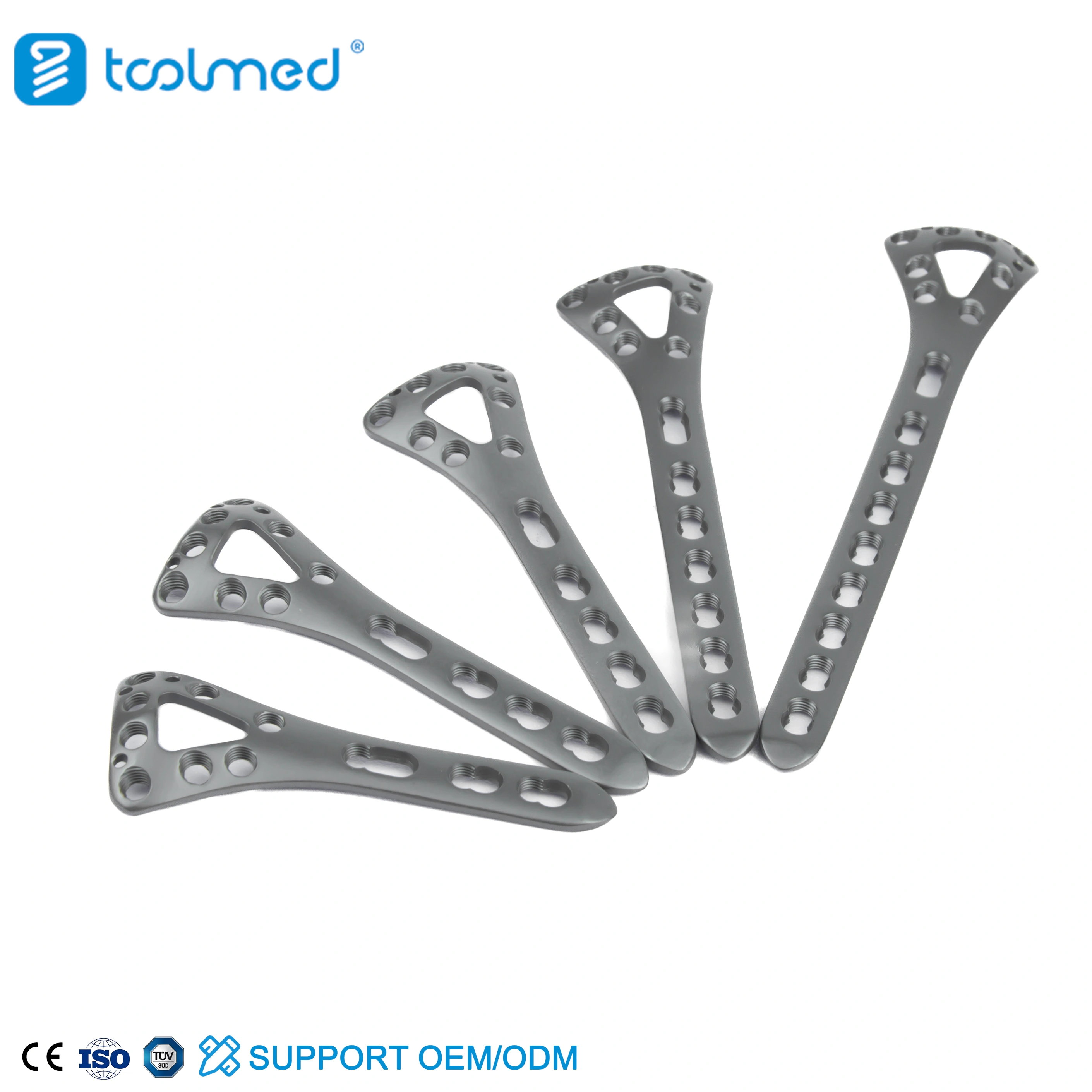
| Product Name | Distal Dorsal Radial Delta Locking Plate |
| Material | TA3 |
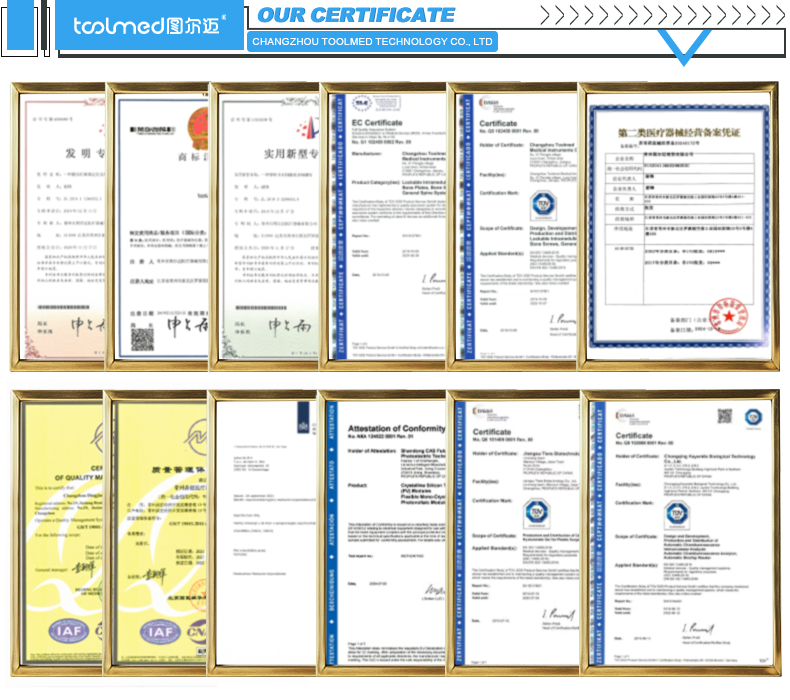
| Certificate | CE Certificate |
| Brand | TOOLMED |
| MOQ | 1 Pcs |
| OEM | Avaliable |
| Package | PE Inner Bag+Carton |
| Payment Method | T/T,Bank transfer, Western Union |
| Delivery Time | 5-15 Days |
| Shipping | DHL EMS UPS TNT FEDEX |

The Distal Dorsal Radial Delta Locking Plate is a specialized titanium plate used to fix severe wrist fractures by approaching the bone from the dorsal (back) side. The plate's head is shaped like a wide triangle (or "Delta") to provide a broad foundation. This allows the surgeon to anchor many small, locking screws into the numerous tiny bone fragments often found in these high-energy fractures, creating a powerful, rigid support system right under the joint surface.
This plate is chosen when the back of the joint surface of the radius is severely broken and needs direct visualization and reduction. While many radius fractures are fixed from the volar (palm) side, dorsal plating is essential when the fracture pattern involves significant comminution or displacement of the dorsal articular fragments, such as in high-energy injuries.
The primary advantage is direct reduction and dorsal buttressing. By accessing the fracture dorsally, the surgeon can perfectly align the fragmented joint surface. The Delta-shaped head ensures maximum stability over the wide distal end of the radius, creating an unyielding buttress that prevents the fracture from collapsing backward when the patient starts using their hand.
Biomechanically, the plate acts as a tension-side buttress for extension-type injuries. The locking screws provide subchondral support, resisting the axial compressive forces that attempt to flatten the joint. The rigid, fixed-angle construct functions as a scaffold, maintaining the anatomical length and tilt of the radius while the bone heals.
The surgery requires a dorsal approach, often between the extensor tendons. The fracture fragments are meticulously reduced and temporarily stabilized with wires. The Delta Plate is then positioned, and the screws are inserted, aiming to capture the joint fragments first. The low-profile design is critical during placement to minimize tendon interference.
Similar to other stable locking fixations, early rehabilitation is encouraged to prevent wrist stiffness. However, due to the plate's location under the extensor tendons, care must be taken to manage soft tissue swelling and monitor for any signs of tendon irritation during the rehabilitation phase.
The Distal Dorsal Radial Delta Locking Plate is a crucial implant for the challenging management of complex dorsal wrist trauma. Its unique Delta shape and fixed-angle technology ensure anatomical restoration and robust stability, delivering the best platform for functional recovery.
The main risk is irritation or rupture of the extensor tendons, which glide directly over the plate. The TOOLMED Delta Plate is designed with a low, smooth profile to mitigate this risk.
It is generally intended to be permanent. However, because of the risk of tendon irritation, if a patient develops symptoms related to the hardware (pain or catching), a second procedure for hardware removal may be necessary.
The Delta Plate often has a broader and more specifically contoured head than a generic T-plate, allowing for a cluster of screws to diverge and support the dorsal joint surface more effectively and with a lower overall profile.
While possible, it is typically overkill. Its design and complexity are best suited for comminuted fractures where the joint surface is severely disrupted and requires the unique subchondral support the Delta design offers.
No. When placed correctly, the low-profile titanium ensures that the normal gliding of the extensor tendons over the bone remains unimpeded, allowing the patient to regain full wrist and finger motion during rehabilitation.
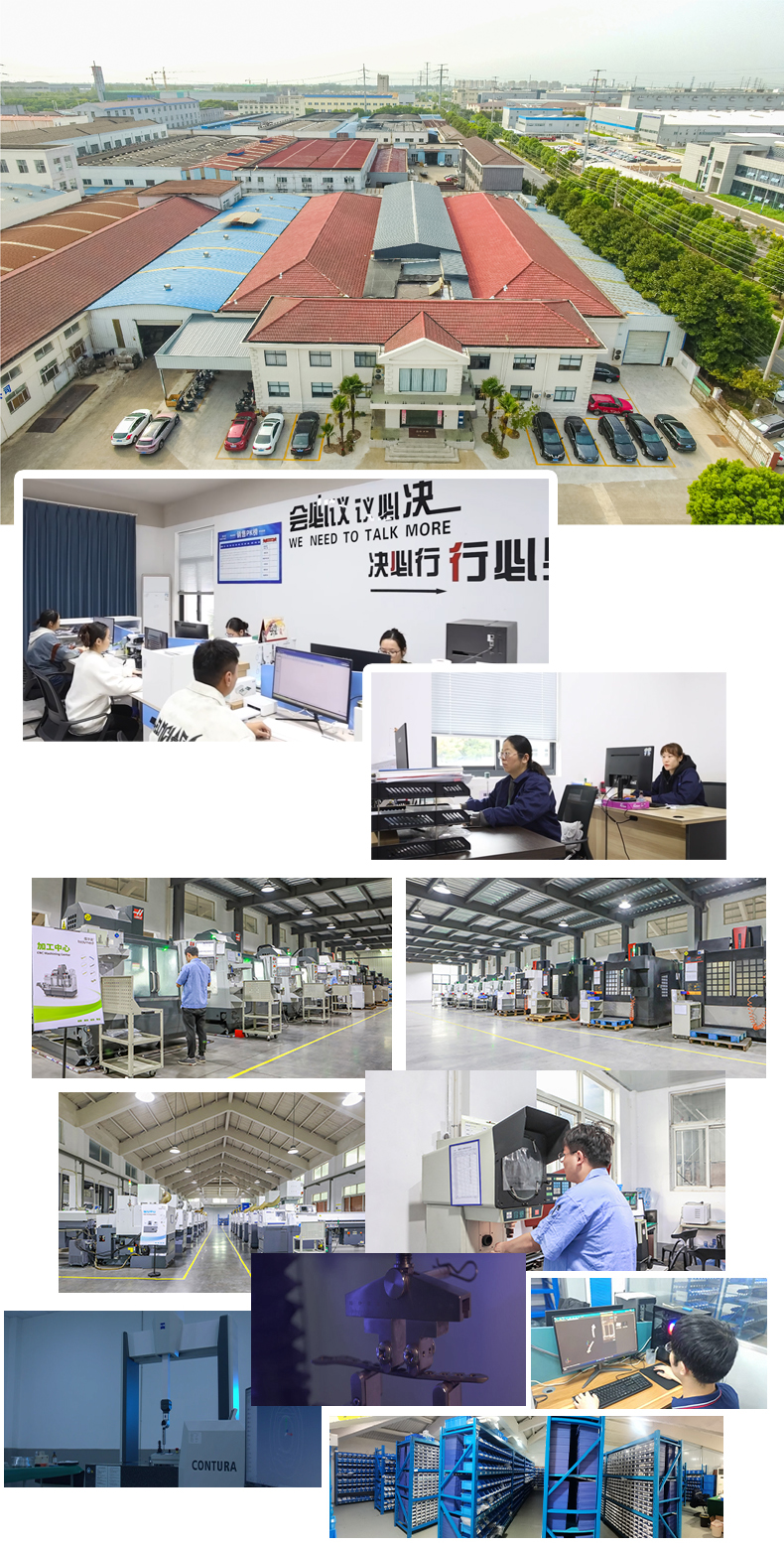
Our factory is equipped with over 60 advanced CNC machines operated by 100+ skilled technicians, a 300 m² GMP-compliant clean room, and a 10,000 m² production facility. We maintain a CNAS and ISO 17025 certified testing center, invest heavily in CNC turning technology, and utilize high-precision inspection systems including CMM, PP, and QV to ensure product quality and consistency.
We offer fast and reliable global shipping. Standard lead times range from 7 to 15 working days, depending on order quantity and customization requirements. Express delivery options are also available upon request.
Yes, we ship to most countries worldwide. We work with trusted logistics partners to ensure timely and secure delivery.
We accept a variety of payment options, including T/T (bank transfer), L/C, and PayPal for smaller orders. Payment terms can be discussed based on order volume and partnership agreements.
Yes, samples are available for evaluation. Please contact our sales team to request product samples and shipping arrangements.
Absolutely. We offer OEM/ODM services including custom packaging, branding, and product development tailored to your specifications.


