
Views: 0 Author: Site Editor Publish Time: 2026-11-09 Origin: Site
Arthroscopic knot tying is an essential skill in minimally invasive orthopedic surgery. It is widely used in procedures involving the shoulder, knee, and other joints, particularly when soft-tissue structures need to be secured using sutures.
The reliability of an arthroscopic repair depends not only on proper tissue preparation and suture placement but also on the security of the final knot. An appropriately constructed knot helps maintain tissue approximation, preserve repair tension, and reduce the risk of postoperative fixation failure.
Sliding knots are commonly used in arthroscopic procedures because they can be advanced through a cannula and tightened at the repair site. Many techniques also incorporate locking configurations to improve knot security and reduce the likelihood of slippage.
Different arthroscopic knot configurations have been developed to address the technical challenges of minimally invasive surgery. This article introduces six commonly discussed techniques: the Giant Knot, the Pretzel knot, the Nicky Knot, the Tabak Knot, the Samsung Medical Center (SMC) Knot, and the Double-Twist Knot.
Arthroscopic procedures require surgeons to perform complex tasks through small portals using specialized instruments. Unlike open surgery, direct access to the repair site is limited, making suture management and knot construction more technically demanding.
A secure arthroscopic knot serves several important functions:
Maintains tissue approximation: It helps keep repaired soft tissues in the intended position.
Preserves repair tension: Appropriate tension supports stable fixation during the early healing period.
Reduces knot slippage: A well-constructed configuration helps prevent unintended loosening.
Supports repair stability: Knot security contributes to the mechanical stability of the overall repair construct.
In rotator cuff repair, Bankart repair, and capsular shift procedures, knot security is particularly important because the sutures must maintain fixation while the repaired tissues undergo biological healing.
However, knot security is influenced by more than the knot configuration alone. Suture material, suture diameter, tissue quality, the number of throws, tensioning technique, and the surgeon's execution can all affect the final result.
Arthroscopic knots are generally discussed in terms of their ability to slide, lock, and maintain tension.
A sliding knot can be advanced along the suture limbs toward the tissue repair site. This feature makes it useful when the surgeon cannot directly access the operative area.
The main advantages include:
Efficient knot advancement through an arthroscopic cannula.
Controlled tensioning at the repair site.
Suitability for minimally invasive soft-tissue fixation.
Adaptability to different arthroscopic repair configurations.
However, a sliding knot must be properly secured after advancement. If the configuration is unstable or the knot is not adequately locked, it may loosen under mechanical loading.
Locking knots are designed to improve resistance to slippage by incorporating a locking mechanism into the knot structure.
Compared with a simple sliding configuration, a locking knot may provide greater resistance to loosening when correctly constructed.
The choice between sliding and locking configurations depends on the surgical procedure, suture characteristics, tissue requirements, and surgeon preference.
The Giant Knot is a self-locking sliding knot introduced by orthopedic surgeons in Bonn, Germany, in 1999, according to the historical description commonly associated with this technique.
It was developed to provide high knot security without requiring an additional separate knot for locking.
The Giant Knot has been used in several arthroscopic shoulder procedures, including:
Arthroscopic rotator cuff repair.
Bankart repair.
Arthroscopic capsular shift procedures.
Its self-locking design is intended to maintain the tension established during knot advancement and reduce the risk of postoperative knot slippage.
Key characteristics:
Sliding configuration.
Self-locking mechanism.
Designed to provide secure fixation without an additional locking knot.
Used in arthroscopic soft-tissue repair.
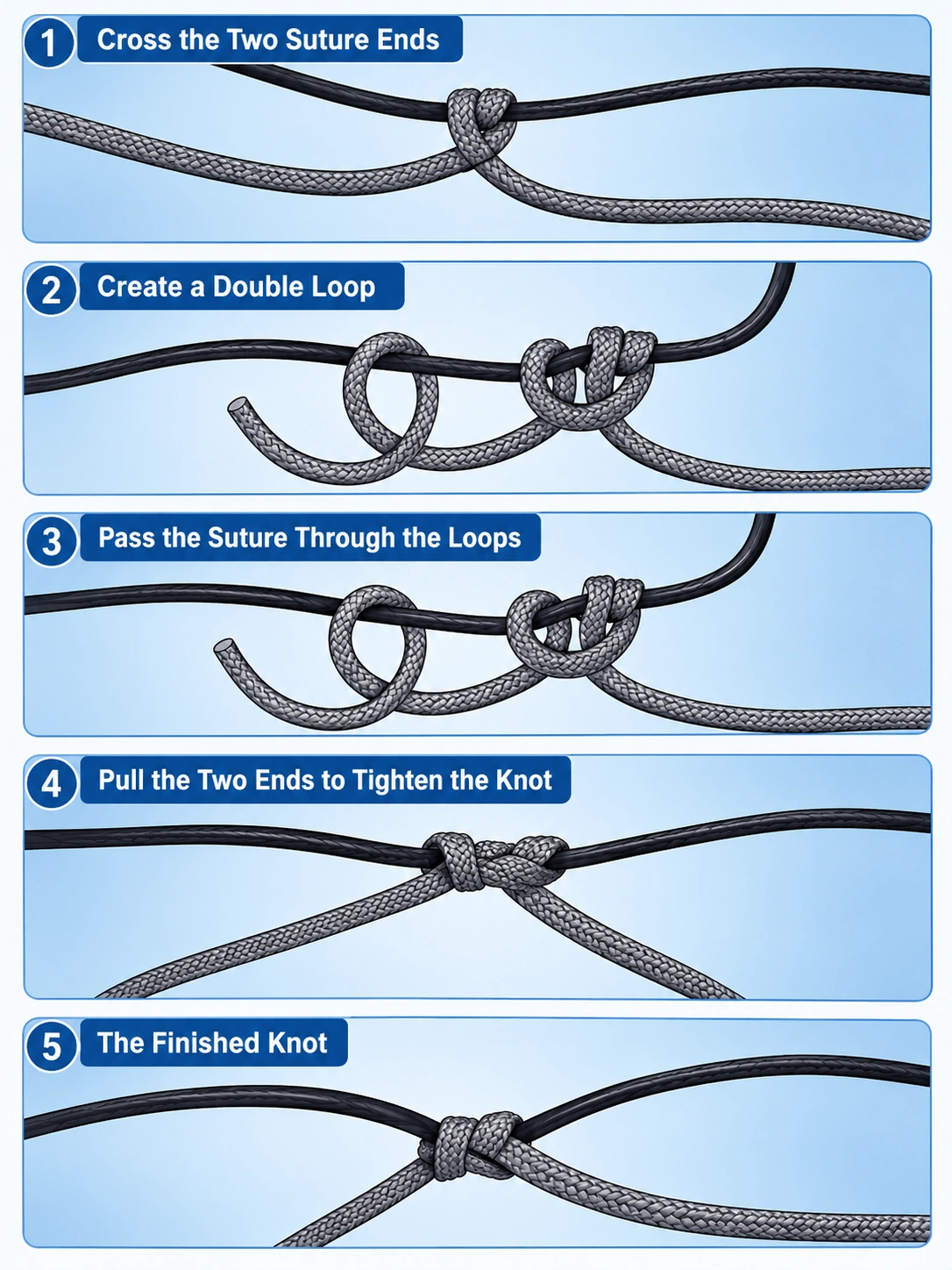
The Pretzel knot is described as a relatively easy-to-learn locking sliding knot.
Its design allows the knot to slide along the suture limbs during tensioning while providing a locking mechanism once the desired tension has been achieved.
The technique is intended to combine controlled advancement with secure fixation.
Key characteristics:
Sliding and locking configuration.
Relatively straightforward learning process.
Allows controlled tensioning.
Designed to maintain the selected repair tension after locking.
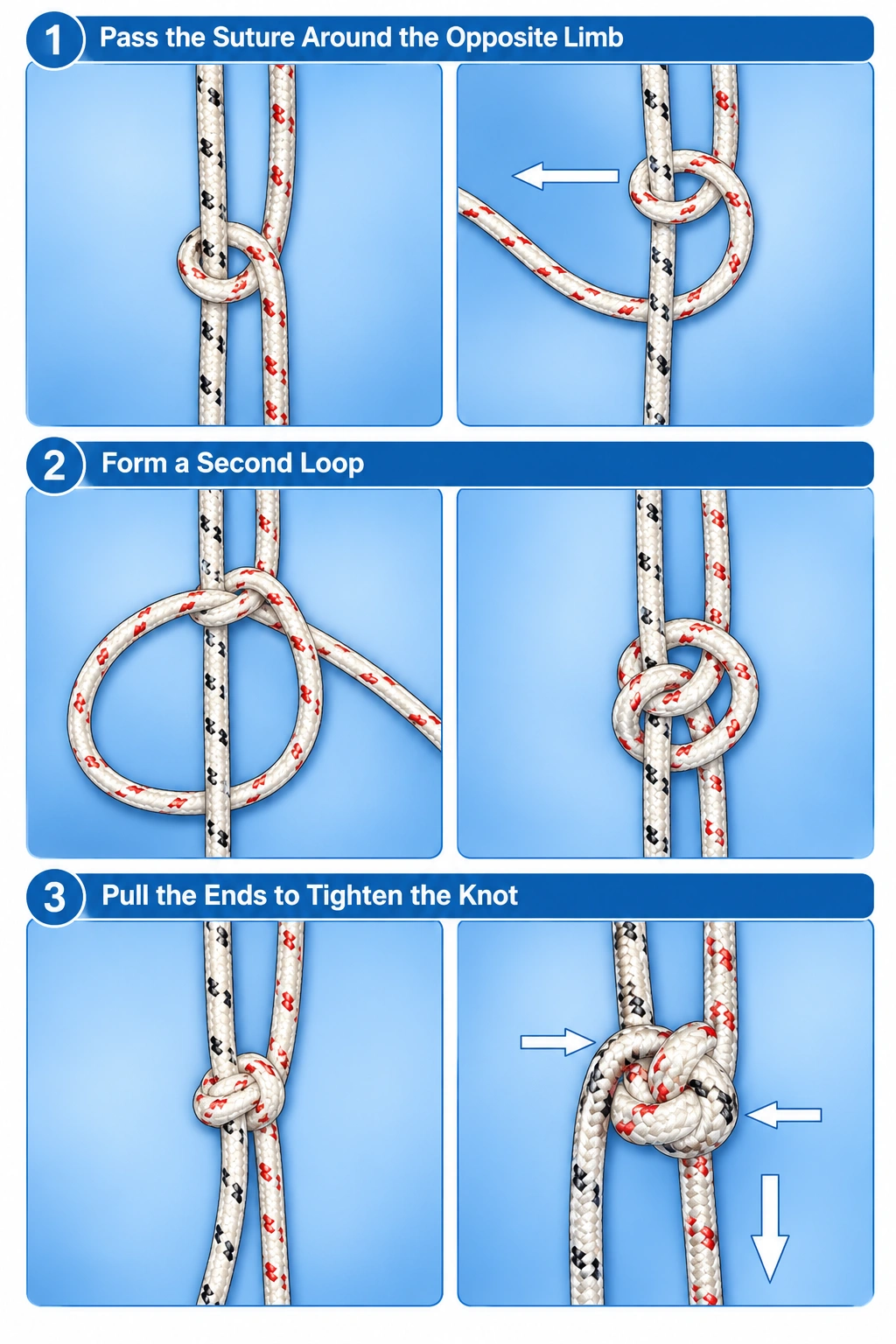
The Nicky Knot is another sliding knot technique used in arthroscopic knot tying.
Its name may remind some readers of the Nicky knot used in necktie tying. Although the names are similar, the arthroscopic Nicky Knot is a distinct surgical suture configuration and should not be confused with a conventional necktie knot.
In arthroscopic surgery, the purpose of this technique is to facilitate knot advancement and secure suture fixation at the repair site.
When selecting a knot configuration, surgeons should consider its ease of advancement, ability to maintain tension, and compatibility with the selected suture material.
Key characteristics:
Arthroscopic sliding knot configuration.
Designed for controlled advancement.
Used as part of arthroscopic suture fixation techniques.
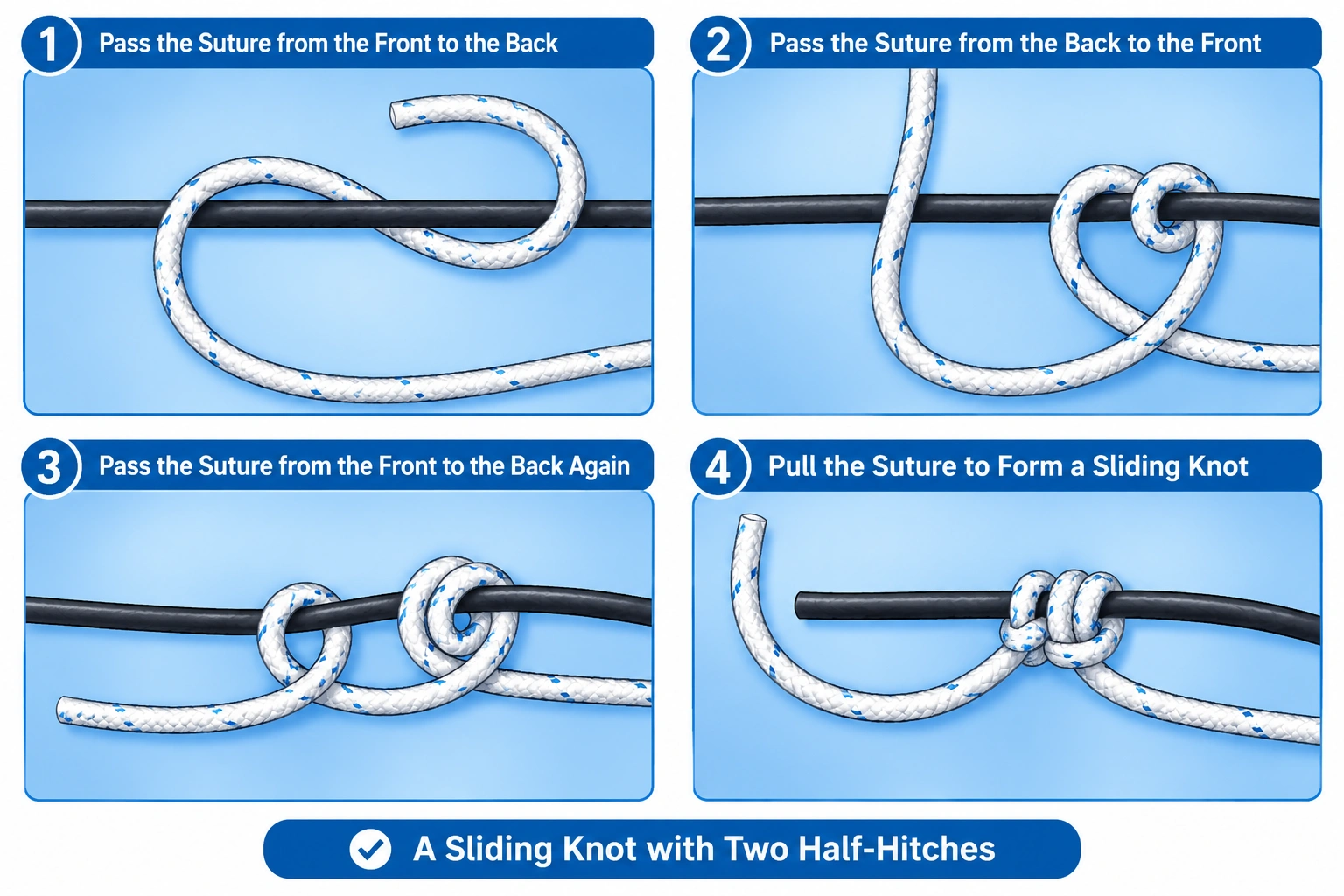
The Tabak Knot is another arthroscopic knot configuration included in this collection of sliding and locking knot techniques.
As with other arthroscopic knots, its practical value should be evaluated according to its advancement characteristics, locking behavior, and ability to maintain the desired tissue approximation.
The exact tying sequence and mechanical characteristics should be presented together with the original technical illustration or an established surgical reference.
Key characteristics:
Arthroscopic knot configuration.
Used in discussions of arthroscopic sliding and locking techniques.
Requires appropriate suture handling and tension control.
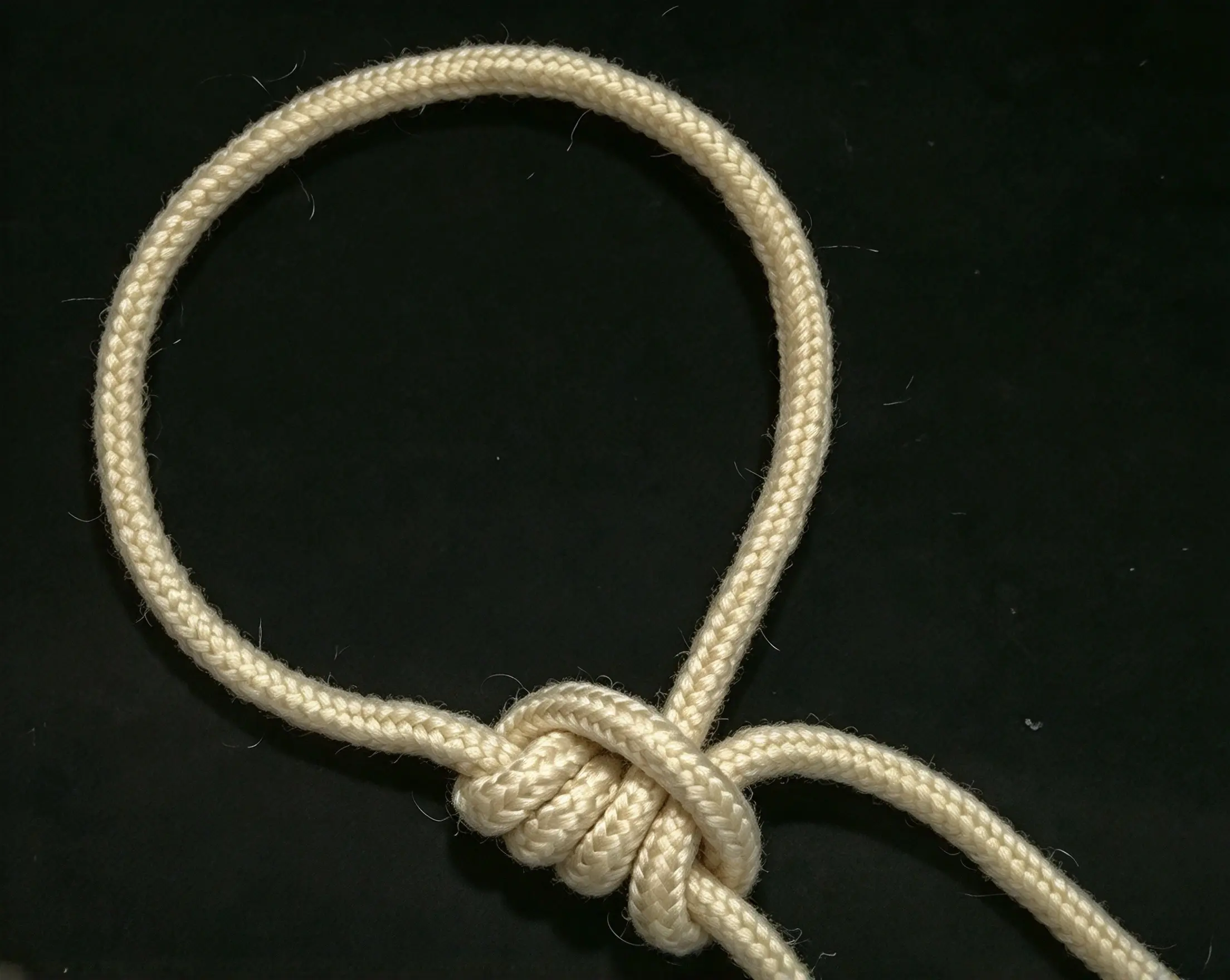
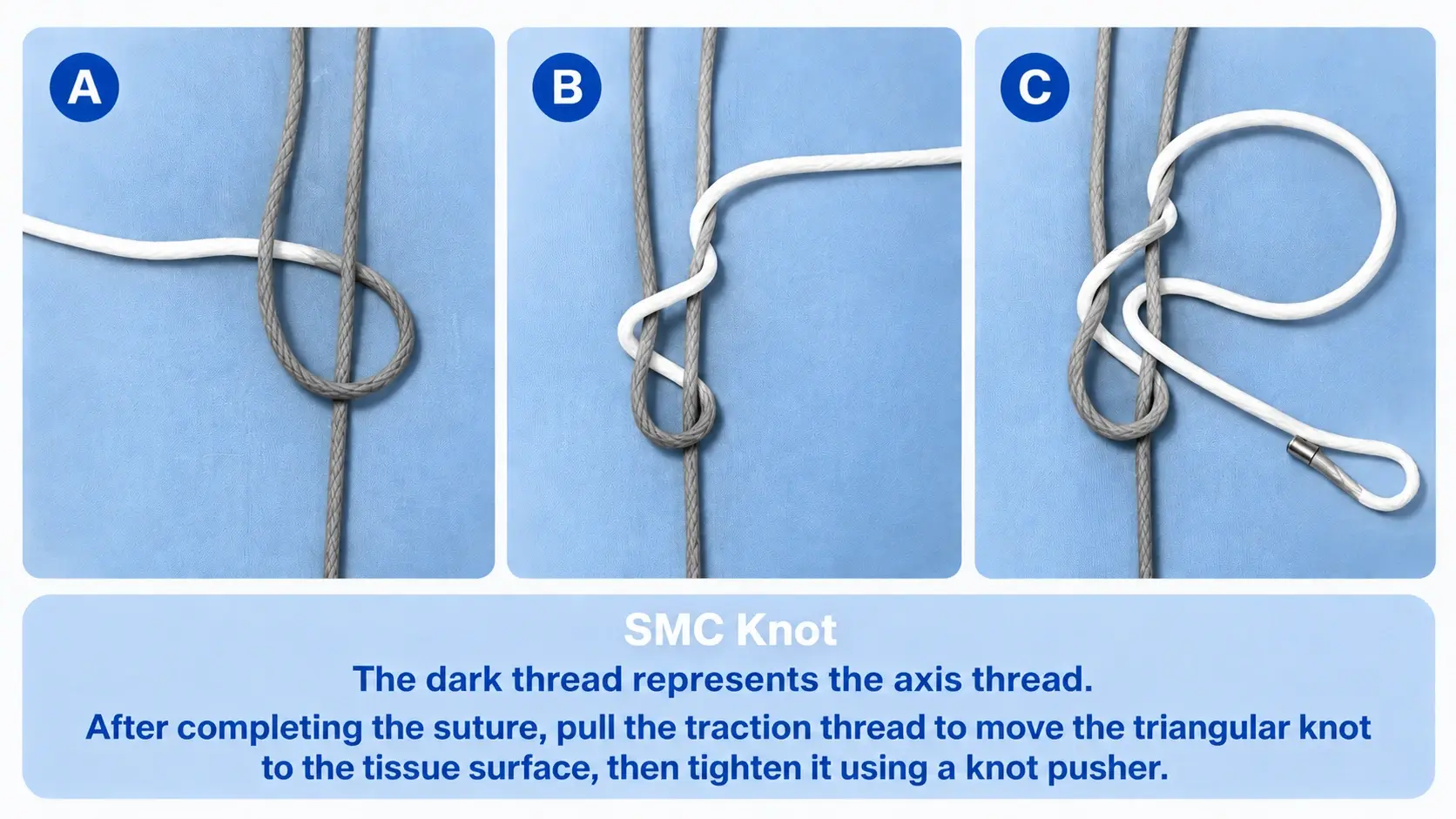
The Samsung Medical Center (SMC) Knot was introduced by Korean surgeons around 2000 and subsequently reported as a new arthroscopic knot technique in the journal Arthroscopy, according to the historical account of its development.
The technique has become an established option in sports medicine and arthroscopic surgery.
The SMC Knot is discussed in the context of arthroscopic suture fixation, particularly where surgeons need a reproducible knot configuration that can be advanced and secured through minimally invasive access.
Key characteristics:
Developed in the field of arthroscopic surgery.
Reported in the orthopedic literature.
Used in sports medicine and arthroscopic soft-tissue repair.
Requires accurate execution to achieve the intended knot security.
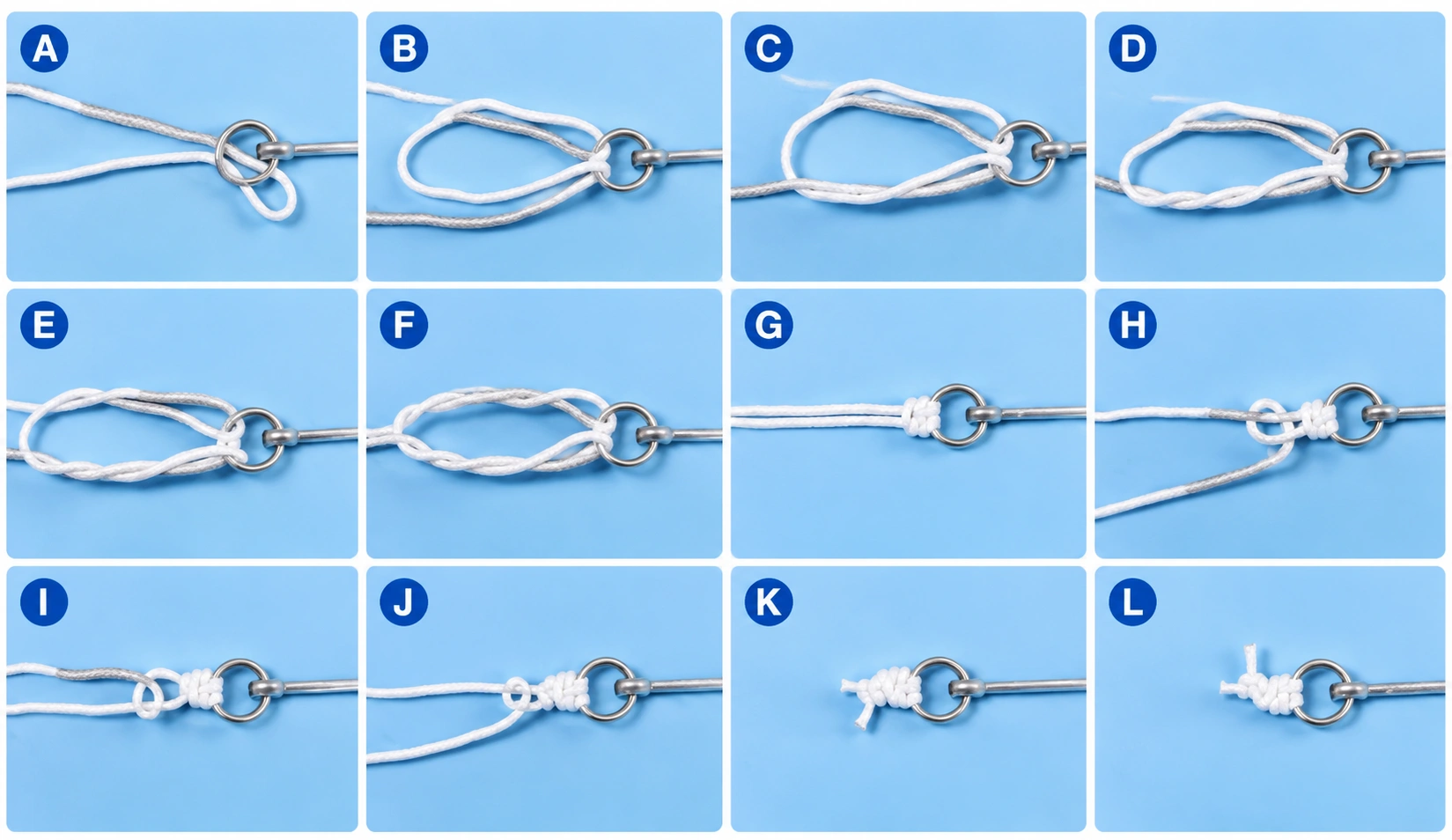
The Double-Twist Knot (DKT) is an arthroscopic knot tying technique attributed to Italian surgeons.
Its development was reported in the journal Arthroscopy.
The technique is included among the knot configurations used in arthroscopic surgery, where controlled suture advancement and reliable fixation are important.
As with other knot techniques, the final performance depends on the exact suture configuration, correct execution, and the mechanical requirements of the repair.
Key characteristics:
Also referred to as the Double-Twist Knot or DKT.
Developed by Italian surgeons, according to the historical description.
Reported in Arthroscopy.
Designed for arthroscopic suture fixation.
Regardless of the knot selected, several technical factors influence the reliability of arthroscopic fixation.
Different suture materials have different mechanical properties, including tensile strength, elasticity, surface characteristics, and resistance to abrasion.
The selected suture should be compatible with the repair technique and the intended mechanical requirements.
A knot configuration should be selected based on its sliding behavior, locking mechanism, and ability to maintain tension.
Not every knot is equally suitable for every procedure. The surgeon should consider the tissue being repaired, the surgical approach, and the characteristics of the suture.
Excessive tension may compromise tissue perfusion or cause tissue damage, while insufficient tension may result in inadequate tissue approximation.
Controlled tensioning is therefore essential when advancing and securing the knot.
The number and arrangement of throws can influence knot security. The appropriate configuration depends on the specific knot technique and suture material.
Surgeons should follow validated technical descriptions and avoid assuming that all knot types require the same number of throws.
After knot tying, the surgeon should evaluate whether the repair maintains the intended tissue position and tension.
Arthroscopic visualization and appropriate probing can help identify loose sutures, incomplete tissue approximation, or other technical problems.
Arthroscopic knot tying is used in a variety of orthopedic procedures.
In rotator cuff repair, sutures are used to reattach torn tendon tissue to the greater tuberosity. Knot security contributes to maintaining tendon-to-bone contact during the healing process.
Bankart repair addresses anterior-inferior labral detachment associated with shoulder instability. Arthroscopic knots help secure the labrum and associated capsulolabral tissue to the glenoid rim.
Capsular shift procedures aim to address excessive capsular laxity. Secure suture fixation is important for maintaining the intended capsular tension.
Depending on the procedure and surgical technique, arthroscopic knot tying may also be used in selected knee and other joint soft-tissue repairs.
An arthroscopic sliding knot is a suture knot that can be advanced along the suture limbs toward the repair site through minimally invasive surgical access. It allows surgeons to establish tissue tension without directly manipulating the knot at the operative site.
A sliding knot is designed to move along the suture limbs during advancement. A locking knot incorporates a mechanism intended to resist further movement or loosening after the desired tension is established. Some arthroscopic techniques combine both characteristics.
The Giant Knot is a self-locking sliding knot associated with arthroscopic shoulder procedures, including rotator cuff repair, Bankart repair, and capsular shift procedures.
SMC stands for Samsung Medical Center. The SMC Knot is an arthroscopic knot technique reported in the orthopedic literature and used in sports medicine.
There is no single knot that is universally the most secure in every clinical situation. Knot performance depends on the configuration, suture material, suture diameter, number of throws, tensioning technique, and loading conditions. Surgeons should select a technique based on the specific repair and supporting biomechanical evidence.
Knot security helps maintain tendon-to-bone contact and the intended repair tension during the early healing period. Knot slippage or fixation failure may compromise the stability of the repair construct.
Arthroscopic knot tying is a fundamental component of modern minimally invasive orthopedic surgery. Sliding and locking knots allow surgeons to secure soft tissues through small portals while maintaining the tension required for repair.
The Giant Knot, Pretzel knot, Nicky Knot, Tabak Knot, SMC Knot, and Double-Twist Knot represent different approaches to arthroscopic suture fixation.
Understanding their configurations, handling characteristics, and locking mechanisms can help surgeons select appropriate techniques for different procedures. Ultimately, reliable arthroscopic fixation depends on proper knot selection, correct execution, appropriate tensioning, and careful verification of the completed repair.
This article is intended for medical education and professional reference. Surgical techniques should be performed by appropriately trained clinicians using validated procedures and the relevant implant and suture system instructions.


