
Views: 0 Author: Site Editor Publish Time: 2026-09-07 Origin: Site
Corticosteroid Injections in Orthopedics: Are They Only Short-Term Relief?
Corticosteroid injections, commonly referred to as “steroid shots” or “joint injections,” remain one of the most frequently used procedures in orthopedic and musculoskeletal medicine. They are often prescribed to reduce pain and inflammation in conditions such as knee osteoarthritis, frozen shoulder, rotator cuff disorders, lateral epicondylitis, and carpal tunnel syndrome.
However, the role of corticosteroid injections is being reassessed as higher-quality evidence becomes available.
The central question is no longer simply:
Do corticosteroid injections work?
Instead, clinicians must ask:
How much clinically meaningful benefit do they provide, how long does that benefit last, and what risks may accompany repeated or poorly timed injections?
Current systematic reviews suggest that corticosteroid injections can provide statistically significant short-term symptom relief, but the magnitude of benefit is often modest and may decline rapidly. At the same time, research has raised concerns about local tissue damage, transient systemic effects, cartilage structural changes, and infection risk when injections are performed too close to joint replacement surgery.
These findings do not mean that corticosteroid injections should never be used. Rather, they support a more selective approach based on the diagnosis, treatment objective, patient risk factors, injection technique, and expected future treatment.
Corticosteroids are potent anti-inflammatory medications. When injected into or around a joint or soft-tissue structure, they may reduce inflammatory signaling, synovial irritation, and pain-related sensitization.
Depending on the target, an injection may be delivered:
Into a joint cavity;
Into a bursa;
Around a tendon sheath;
Near a compressed nerve;
Into a selected periarticular soft-tissue space.
The clinical effect depends on the underlying pathology. A corticosteroid may be more useful when inflammation is a major component of symptoms than when pain is primarily caused by advanced mechanical degeneration, structural failure, or progressive nerve compression.
Importantly, corticosteroids generally provide symptom control rather than disease modification. They do not reliably restore damaged cartilage, repair a torn tendon, correct a deformity, or reverse the mechanical causes of osteoarthritis.
A major issue in interpreting injection studies is the difference between a result that is statistically significant and one that is meaningful to patients.
A treatment may produce a measurable improvement in pain scores compared with placebo, but the difference may be too small to substantially improve walking, sleep, work, or daily activities.
Knee osteoarthritis is one of the most extensively studied indications for intra-articular corticosteroid injections.
A 2024 systematic review and meta-analysis of randomized controlled trials found that corticosteroid injections produced statistically significant improvements in pain and function compared with placebo at short-term follow-up. However, the improvement exceeded the predefined minimal clinically important difference only during the short-term period, with clinical relevance already diminishing after approximately six weeks. The review also noted limitations in the quality and consistency of the available evidence.This distinction is clinically important. A patient may experience meaningful relief during the first few weeks, but that improvement should not automatically be interpreted as evidence that the injection has changed the long-term course of osteoarthritis.
Across several orthopedic conditions, the pattern is broadly similar:
Symptoms improve during the early post-injection period;
The effect reaches a peak within days or weeks;
The benefit gradually declines;
Long-term outcomes may become similar to those of placebo or alternative treatments.
The duration varies according to the diagnosis, medication, injection site, disease severity, and study design. Therefore, it is more accurate to describe corticosteroid injections as time-limited symptom-relief treatments rather than universally effective long-term therapies.
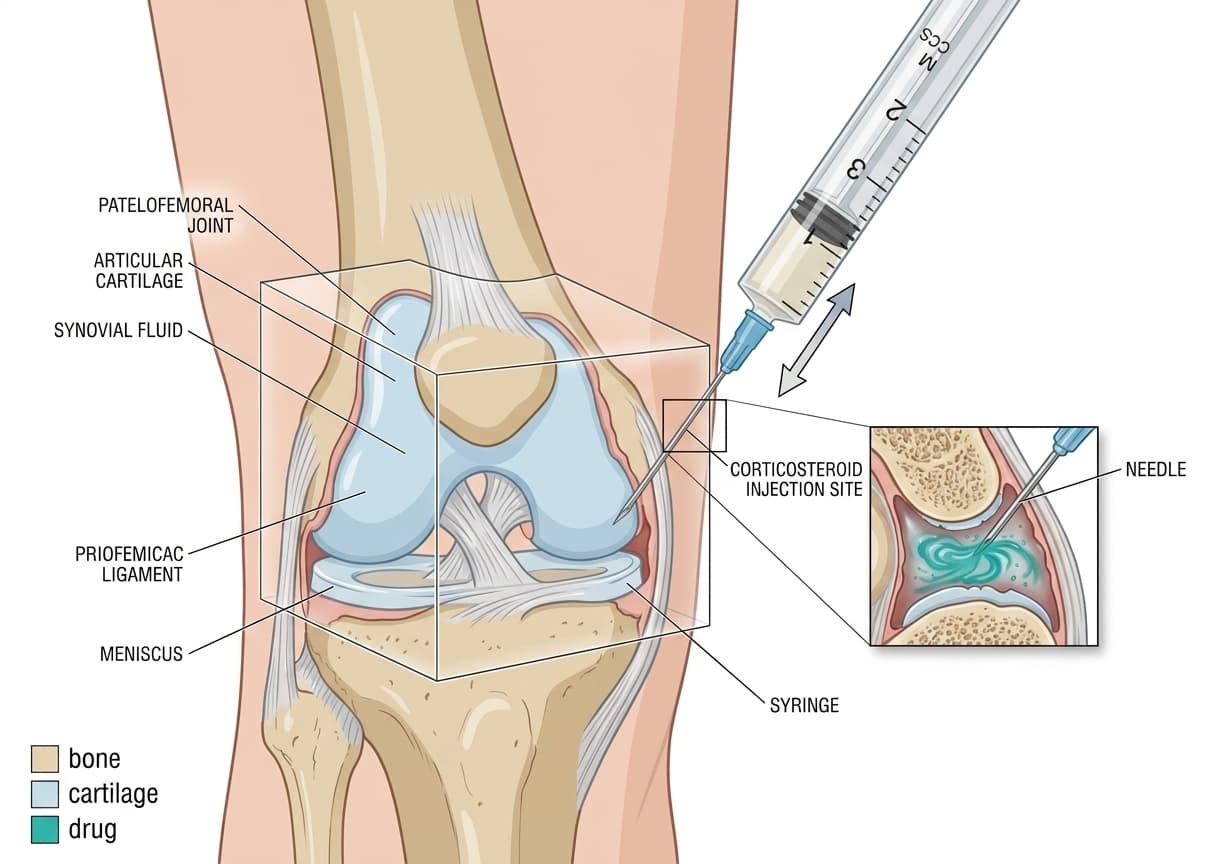
Intra-articular corticosteroid injections may be considered when a patient has a painful inflammatory flare, significant synovitis, or symptoms that temporarily prevent participation in exercise and rehabilitation.
Short-term pain reduction;
Temporary improvement in function;
Facilitation of physical therapy or strengthening;
Possible relief during an acute inflammatory exacerbation.
The benefit is usually short-lived;
Corticosteroids do not restore cartilage;
Repeated injections may provide diminishing returns;
The long-term structural effect remains a concern.
A systematic review and meta-analysis of six studies involving 1,437 participants found that intra-articular corticosteroid use was associated with greater odds of worsening cartilage-related imaging findings compared with control treatment. The authors emphasized that further research is needed to establish causation and the underlying mechanism.
The evidence supports selective use, rather than routine injections at fixed intervals for chronic knee osteoarthritis. An injection may be reasonable when short-term symptom control has a clear purpose, but repeated treatment should be reassessed according to pain response, function, alternative options, and the patient’s future surgical plans.
Corticosteroid injections are frequently used for shoulder pain attributed to rotator cuff tendinopathy, subacromial pain, or bursitis.
They may reduce pain in the short term, but the underlying condition is often degenerative or load-related rather than driven solely by inflammation.
Potential concerns include:
Temporary pain relief without correction of the underlying tendon problem;
Recurrent symptoms after the medication wears off;
Possible weakening of tendon tissue;
Increased concern when repeated injections are performed near a tendon or before planned repair.
For chronic rotator cuff-related pain, rehabilitation, progressive loading, scapular control, and correction of contributing biomechanical factors are generally important components of management. Corticosteroid injection should not replace a structured rehabilitation program.
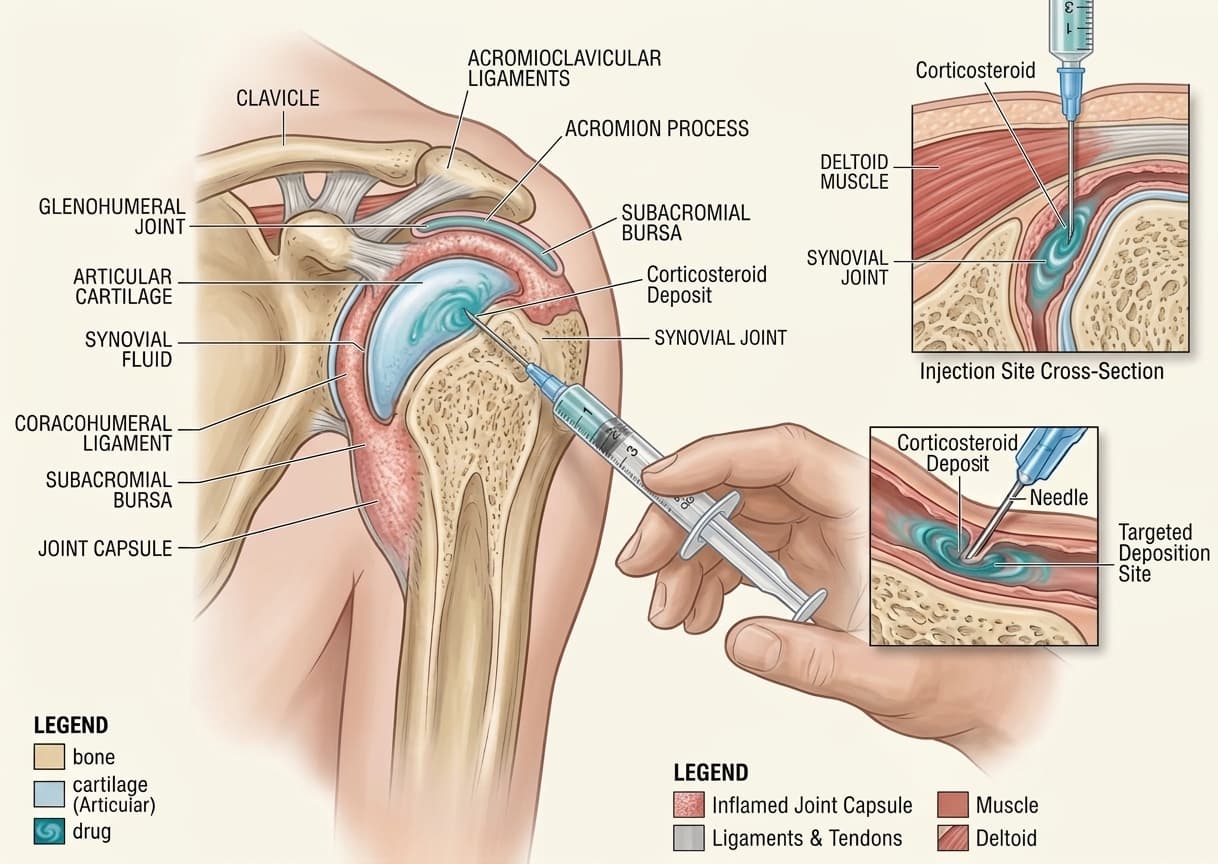
Frozen shoulder, or adhesive capsulitis, differs from many degenerative tendon disorders. It involves pain, capsular inflammation, and progressive restriction of shoulder motion.
In this setting, intra-articular corticosteroid injections may be more useful because reducing pain can help patients participate in stretching and mobility exercises.
Short-term reduction in pain;
Improvement in early shoulder mobility;
Assistance with rehabilitation during the painful phase;
Temporary improvement in sleep and daily function.
The benefit is still time-dependent, and injection should usually be combined with an individualized rehabilitation plan rather than used as a stand-alone treatment.
Lateral epicondylitis, commonly called tennis elbow, provides one of the clearest examples of the difference between early symptom relief and long-term outcome.
Corticosteroid injections may produce faster pain improvement during the first several weeks. However, studies have reported that this early benefit may disappear or reverse during longer-term follow-up, with higher recurrence or less favorable outcomes than some conservative treatments.
Corticosteroid injections should generally not be considered the default first-line treatment for chronic tennis elbow. A comprehensive approach may include:
Activity modification;
Progressive eccentric or isotonic tendon loading;
Forearm and grip strengthening;
Ergonomic adjustments;
Education about the natural course of the condition.
An injection may occasionally be considered for carefully selected patients who require short-term symptom control, but the possibility of recurrence and the lack of durable disease correction should be explained.
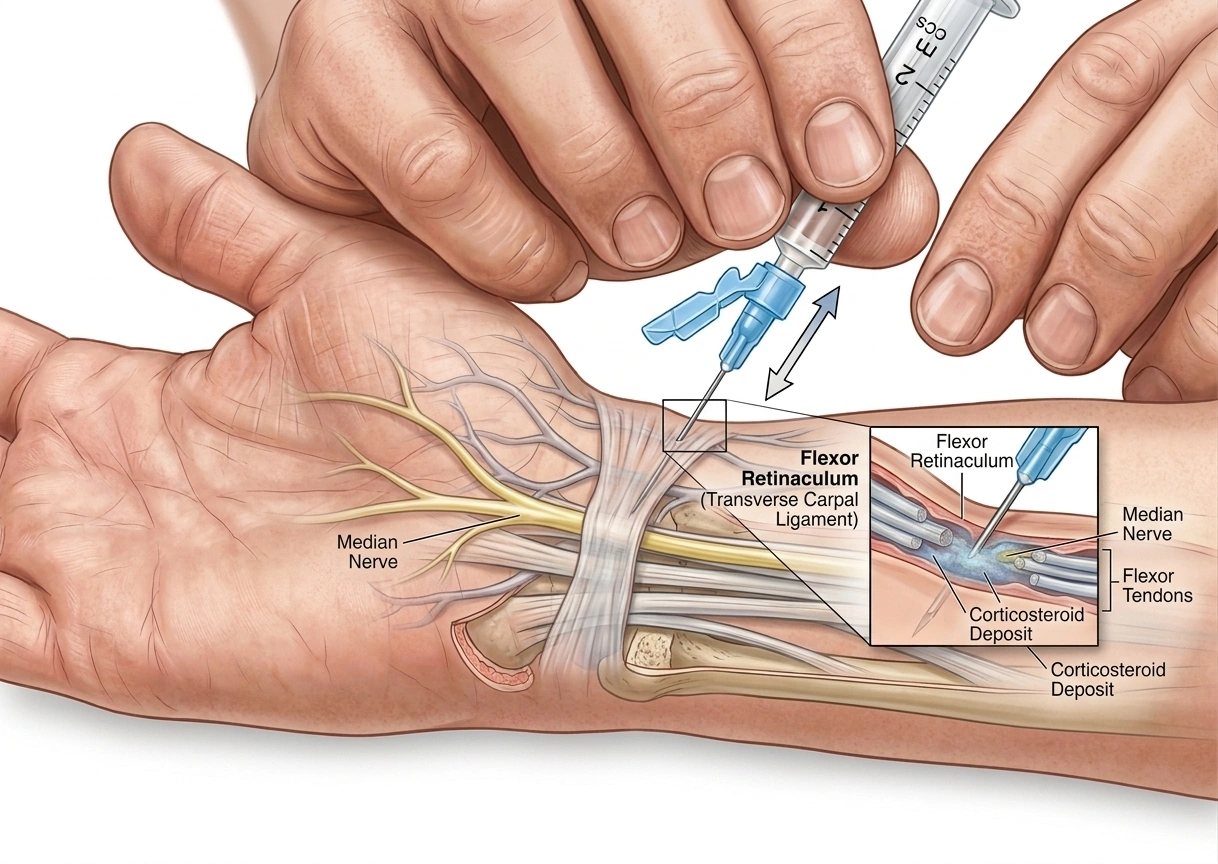
Carpal tunnel syndrome is a compressive neuropathy rather than a primary joint disorder.
Local corticosteroid injection may temporarily reduce symptoms by decreasing inflammation and pressure around the median nerve. Evidence supports short-term improvement, although the effect tends to decline over time.
A 2023 Cochrane review update reported that local corticosteroid injection may improve symptoms for up to several months and may modestly reduce the need for surgery at one year, although the certainty of evidence varies across outcomes and comparisons.
Corticosteroid injection may be considered for:
Mild-to-moderate symptoms;
Patients seeking temporary relief;
Patients who need time before surgery;
Selected patients with transient or pregnancy-associated symptoms.
It should not be used to delay necessary decompression when there is progressive weakness, significant sensory loss, or evidence of nerve damage.
Because the effects of corticosteroid injections are often temporary, repeated treatment is common in clinical practice. However, repeated injections should not be viewed as automatically safe simply because an individual injection produced relief.
Repeated injections may lead to:
Shorter duration of symptom relief;
Less predictable response;
Increasing dependence on temporary symptom control;
Delayed rehabilitation or definitive treatment.
The decision to repeat an injection should be based on a documented clinical response rather than a predetermined schedule alone.
A landmark randomized trial published in JAMA evaluated patients with knee osteoarthritis who received intra-articular triamcinolone every three months for two years. Compared with saline, the corticosteroid group experienced greater cartilage volume loss on MRI, without a significant difference in knee pain. This study raised important concerns about routine, scheduled injections for chronic knee osteoarthritis.
However, the findings should be interpreted carefully. The trial does not prove that every individual injection causes clinically important cartilage damage, nor does it establish that all corticosteroid preparations and injection schedules have identical effects.
A broader meta-analysis also found an association between intra-articular corticosteroid use and worsening cartilage-related imaging outcomes, while emphasizing the need for further research.
Routine, indefinite corticosteroid injections for chronic osteoarthritis should be avoided unless there is a clear and carefully reassessed clinical rationale.
Although corticosteroid injections are commonly considered minimally invasive, they are not risk-free. Complications range from temporary discomfort to rare but serious infections and tissue injury.
Some patients experience increased pain during the first 24–48 hours after injection. This may be related to local irritation or a reaction to the injected preparation.
Superficial injections may cause:
Skin depigmentation;
Subcutaneous fat atrophy;
Local contour changes;
Occasionally persistent cosmetic effects.
These complications are particularly relevant when injections are performed near superficial tendons, small joints, or areas with limited soft-tissue coverage.
Corticosteroids may adversely affect tendon tissue, particularly when injected directly into tendon substance or repeatedly around vulnerable structures.
Extra caution is warranted near:
The Achilles tendon;
The patellar tendon;
The plantar fascia;
The rotator cuff;
The common extensor tendon;
The biceps tendon.
A corticosteroid injection should not be used as a substitute for evaluating a suspected tendon tear or structural failure.
Septic arthritis and deep soft-tissue infection are uncommon but potentially devastating complications. New severe pain, fever, progressive swelling, redness, or systemic symptoms after injection require urgent medical assessment.
Even when corticosteroids are injected into a joint or soft-tissue structure, some systemic absorption may occur.
Blood glucose may rise after corticosteroid injection, particularly in patients with diabetes. The degree and duration of the increase vary according to the injection site, medication, dose, and individual metabolic status.
Patients with diabetes should receive individualized advice regarding:
Blood glucose monitoring;
Medication adjustment;
Warning signs of significant hyperglycemia;
When to contact their treating clinician.
A corticosteroid injection can temporarily suppress the hypothalamic-pituitary-adrenal axis. The clinical significance depends on the dose, preparation, number of injections, and patient factors.
This is particularly relevant when a patient is expected to undergo major surgery or experience substantial physiological stress soon after injection. The injection history should therefore be communicated to the surgical and anesthesia teams when appropriate.
Possible systemic reactions include:
Facial flushing;
Temporary sleep disturbance;
Mood changes;
Transient blood pressure elevation;
Menstrual irregularities;
Temporary changes in appetite or blood glucose.
The presence of a local injection does not eliminate the need to review systemic risk factors.
One of the most clinically important recent concerns involves the timing of corticosteroid injections before arthroplasty.
A 2023 systematic review and meta-analysis evaluated preoperative intra-articular steroid injections before total knee arthroplasty. The pooled analysis found that injections administered within three months before surgery were associated with a higher risk of periprosthetic joint infection, with a pooled odds ratio of 1.26. The overall association was not statistically significant when all injection intervals were combined, highlighting the importance of timing.
Patients with advanced osteoarthritis who may require joint replacement should be asked about:
Previous corticosteroid injections;
Injection date;
Injection site;
Medication and dose, when available;
Planned arthroplasty date;
History of diabetes, immunosuppression, or previous infection.
A commonly used precaution is to avoid intra-articular corticosteroid injection within three months before joint replacement, although the exact decision should be made by the treating surgeon according to the patient’s circumstances and current institutional practice.
The evidence does not mean that every patient injected within three months will develop infection. It means that the risk-benefit balance becomes less favorable when surgery is approaching.
Corticosteroid injection should generally not be performed when there is:
Suspected or confirmed infection at the injection site;
Suspected septic arthritis;
Active systemic infection or bacteremia;
Known serious allergy to the intended preparation;
An unclear diagnosis in which injection could delay urgent treatment.
Injection into a prosthetic joint requires particular caution and specialist assessment because of the potential consequences of infection.
Additional caution may be necessary in patients with:
Poorly controlled diabetes;
Significant immunosuppression;
Coagulation disorders;
Anticoagulant therapy;
Previous injection-related complications;
Suspected tendon rupture;
Planned surgery;
Repeated previous injections with limited benefit.
Contraindications and precautions vary by injection site, medication, and clinical context. They should be assessed by a qualified healthcare professional rather than applied as a universal checklist.
Ultrasound guidance can help clinicians visualize:
The intended joint or soft-tissue target;
Tendons and tendon sheaths;
Blood vessels;
Nerves;
Fluid collections;
The needle during the procedure.
Its greatest value may be in deep, small, anatomically complex, or high-risk targets.
Ultrasound-guided injection is generally more accurate than landmark-guided injection for many anatomical sites. This is especially relevant for:
Hip injections;
Small hand and wrist joints;
Small foot and ankle joints;
Biceps tendon sheath injections;
Patients with altered anatomy;
Patients with obesity or difficult landmarks.
Improved needle placement does not automatically guarantee a better long-term clinical outcome.
A 2024 systematic review of randomized trials comparing ultrasound-guided and landmark-guided injections in knee, hip, and hand osteoarthritis found evidence of improved procedural pain, follow-up pain, and function with ultrasound guidance, but the available studies were limited in number and follow-up duration.
A separate 2025 systematic review of knee injections reported higher cumulative accuracy for ultrasound-guided procedures than landmark-guided procedures, supporting the technical value of ultrasound guidance.
It should be viewed as a tool for improving precision and potentially safety—not as a guarantee that corticosteroid treatment is appropriate.
The best alternative depends on the diagnosis. No single injection therapy is suitable for every orthopedic condition.
Injectable NSAIDs, such as ketorolac or diclofenac preparations, have been studied as alternatives in selected musculoskeletal conditions.
Some systematic reviews have reported similar short-term pain outcomes compared with corticosteroid injections for conditions such as subacromial pain and knee osteoarthritis. However, injectable NSAIDs are not automatically risk-free. Their systemic absorption, renal effects, gastrointestinal risks, cardiovascular considerations, and regulatory status must be assessed.
Therefore, NSAID injection should not be described as universally safer or universally appropriate.
Platelet-rich plasma, or PRP, is increasingly studied for chronic tendon disorders and knee osteoarthritis.
In some comparative studies, corticosteroids provide faster early relief, whereas PRP may demonstrate more favorable outcomes at later follow-up. However, PRP protocols vary substantially in:
Platelet concentration;
Leukocyte content;
Injection volume;
Number of injections;
Preparation method;
Rehabilitation protocol.
The evidence is therefore heterogeneous, and PRP should be presented as a potential option rather than a proven replacement for corticosteroids in every condition.
Hyaluronic acid injections are primarily used for knee osteoarthritis. Some studies report improvement in pain and function, but the magnitude of benefit and clinical relevance remain debated.
Hyaluronic acid should be considered within the broader treatment plan, particularly when exercise therapy, weight management, topical or oral medication, and patient preferences have already been evaluated.
Prolotherapy commonly involves the injection of hypertonic dextrose solutions with the aim of stimulating a local healing response.
Some studies suggest potential benefits for selected chronic musculoskeletal conditions, but protocols and evidence quality vary. It should not be promoted as a universally established disease-modifying treatment.
For many chronic orthopedic conditions, the most important long-term interventions remain:
Progressive strengthening;
Physical therapy;
Weight management when appropriate;
Activity modification;
Ergonomic correction;
Neuromuscular training;
Bracing or support when indicated;
Patient education;
Timely surgical assessment for structural disease.
Injections may create a temporary opportunity to participate in rehabilitation, but they should not replace treatment directed at the underlying pathology.
A practical decision-making framework should include the following questions.
An injection should not be used simply because a patient has pain. The clinician should determine whether the symptoms are caused by:
Inflammation;
Mechanical degeneration;
Tendon pathology;
Nerve compression;
Infection;
Fracture;
Referred pain;
Structural failure.
The goal should be clearly defined, such as:
Temporary pain relief;
Improved sleep;
Enabling physical therapy;
Reducing an inflammatory flare;
Delaying surgery for a limited period.
Patients should understand that relief may last weeks or months rather than years. A realistic expectation is essential for shared decision-making.
If joint replacement or tendon surgery may be needed, the timing of injection should be discussed before treatment.
The clinician should review:
Number of previous injections;
Duration of benefit;
Adverse effects;
Injection accuracy;
Interval between injections;
Whether the underlying condition is progressing.
They are not inherently harmful in every situation. They can provide useful short-term relief for selected conditions. However, they may cause local or systemic adverse effects, and repeated use may create additional concerns.
The duration varies by diagnosis and injection site. In many musculoskeletal conditions, clinically meaningful benefit is most apparent during the first several weeks and may decline thereafter.
Some studies, including a randomized trial and subsequent meta-analysis, have raised concerns about cartilage-related structural changes after intra-articular corticosteroid treatment. However, the degree of risk for an individual patient remains uncertain, and the evidence does not establish that every injection causes clinically important cartilage damage.
There is no universally appropriate schedule for every joint or condition. Repetition should depend on the diagnosis, response, alternative treatments, patient risk factors, and future surgery plans.
Injections close to arthroplasty may increase the risk of periprosthetic joint infection. Many clinicians avoid intra-articular corticosteroid injections within three months before joint replacement, subject to specialist assessment.
Not always. However, it is particularly useful for deep joints, small targets, difficult anatomy, and procedures where avoiding nerves, vessels, or tendon substance is important.
Not automatically. Each treatment has its own evidence base, contraindications, preparation differences, and potential complications. The appropriate choice depends on the condition and patient profile.
Based on the current evidence, corticosteroid injections should be used according to the following principles:
Use selectively rather than reflexively.The presence of pain alone is not sufficient justification for injection.
Set realistic expectations.Explain that benefit is usually short-term and may not exceed the minimal clinically important difference for long-term outcomes.
Avoid routine scheduled injections for chronic osteoarthritis.Repeated injections should be reassessed rather than automatically administered every few months.
Consider the underlying pathology.Injections may be more useful for inflammatory conditions or temporary symptom control than for chronic degenerative tendon disease.
Review future surgery plans.Avoid poorly timed injections before arthroplasty when possible, particularly within the three-month risk window.
Use ultrasound when precision or safety is important.This is especially relevant for deep joints, small structures, altered anatomy, and high-risk injection targets.
Monitor patients with systemic risk factors.Diabetes, immunosuppression, anticoagulant use, and previous injection complications require individualized assessment.
Prioritize rehabilitation and definitive treatment.An injection should support a broader treatment strategy rather than delay necessary care indefinitely.
Corticosteroid injections remain useful tools in modern orthopedic practice, but their role should be more selective than the traditional “quick fix” approach suggests.
The current evidence indicates that they often provide modest, clinically meaningful short-term relief, particularly in carefully selected patients. However, the benefit commonly declines within weeks or months, and repeated use may raise concerns about tissue health, cartilage structure, systemic effects, and surgical infection risk.
The most appropriate approach is neither to reject corticosteroid injections entirely nor to use them automatically. Instead, clinicians should integrate:
Accurate diagnosis;
Clear treatment goals;
Patient-specific risk assessment;
Appropriate injection technique;
Consideration of future surgery;
Rehabilitation and non-injection treatment;
Shared decision-making.
The modern principle is simple:
Corticosteroid injections should be used as a targeted therapeutic tool—not as a routine substitute for definitive orthopedic care.


