
Views: 14 Author: Site Editor Publish Time: 2025-11-29 Origin: Site
Precision is the backbone of orthopedic implant manufacturing. For global distributors, understanding how a manufacturer controls machining accuracy is essential for evaluating long-term stability, regulatory readiness, and product reliability. CNC (Computer Numerical Control) machining plays a central role in achieving this consistency. In this article, we break down why CNC precision matters and how TOOLMED integrates accuracy, repeatability, and quality assurance into every implant it produces.
Orthopedic implants are among the most demanding medical devices to manufacture. Unlike general metal components, they must integrate perfectly with human anatomy, surgical tools, and the biomechanical forces acting on the body after implantation. Every curve, every hole, every thread, and every surface plays a specific role in how the implant behaves inside a patient. Because of this, even extremely small deviations—sometimes only a few micrometers—can affect the implant’s performance.
A locking screw, for example, relies on tight geometric compatibility between the screw threads and the plate's threaded hole. If the pitch, angle, or depth of the threads deviates by even 0.01–0.02 mm, the surgeon may experience resistance during insertion or improper engagement. This isn’t simply an inconvenience—it can compromise fixation stability, prolong surgery time, or cause the surgeon to switch components mid-procedure.
Precise hole spacing is another critical factor. Plates are designed with exact distances between each hole so the implant can distribute mechanical loads evenly across the bone. When these distances vary, even slightly, it can create areas of concentrated stress, increasing the risk of implant failure or postoperative complications. A misalignment of less than a tenth of a millimeter can change how the entire construct bears weight.
Surface texture also plays a key role in orthopedic performance. The smoother and more uniform a surface is, the more predictable the implant’s behavior during insertion. Titanium, for instance, is notoriously difficult to machine; poor control over cutting parameters can lead to micro-burrs, roughness, or inconsistent edges. These imperfections can increase friction during screw insertion, damage surrounding bone tissue, or affect long-term biocompatibility.
CNC precision solves all these issues because it transforms complex digital designs into consistent, repeatable physical components with extremely tight tolerances. It allows manufacturers to eliminate human variability and ensure that every implant—from the first piece of the batch to the last—functions exactly as intended.


When an orthopedic implant is precisely manufactured, the surgical experience becomes dramatically more predictable. Surgeons expect locking screws to engage smoothly, plates to sit naturally against bone contours, and implant components to interact seamlessly without unexpected resistance. Precision machining ensures these expectations are met.
Imagine a surgeon inserting a screw and encountering unexpected torque at the final stage of locking. This might suggest misalignment or an uneven thread profile, which can create uncertainty in the surgeon’s mind. Precise CNC machining minimizes these occurrences, giving surgeons the confidence that each instrument and implant will behave as anticipated.
In trauma surgery, time is often a critical factor. A precisely machined implant can reduce intraoperative adjustments, shorten procedure time, and lower the risk of complications. This has direct benefits for patient outcomes, including reduced anesthesia duration, less trauma to bone tissue, and more stable fixation that promotes natural healing.
From the patient’s perspective, implant precision affects long-term function and comfort. An implant with accurately machined features is more likely to maintain stability under daily biomechanical loads. Misaligned holes, rough surfaces, or poor thread engagement may introduce stress points that weaken the construct, contributing to implant loosening, breakage, or delayed union.
CNC precision also improves reproducibility across batches. A surgeon who uses TOOLMED implants in multiple operations expects each product to feel and function the same way. If one batch fits perfectly but the next has slight differences, the surgeon’s trust in the brand diminishes. Precision machining maintains consistency, reinforcing surgeon confidence and reducing complaint rates for distributors.
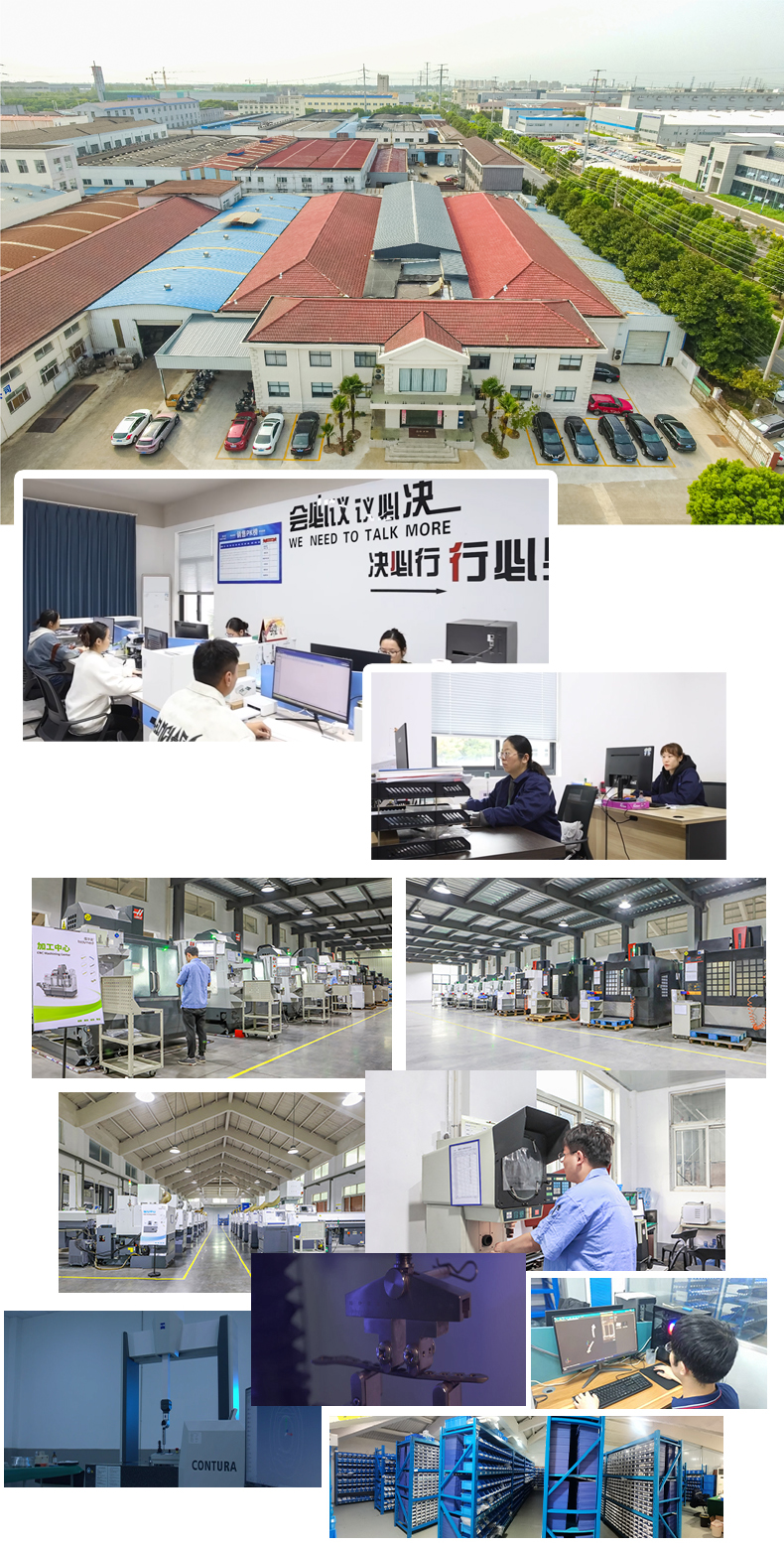
TOOLMED operates with advanced CNC systems specifically suited for orthopedic products. Five-axis machining centers allow complex angles and contours to be created in a single setup, reducing cumulative errors. Automatic tool compensation ensures each cut remains precise, even as tools experience normal wear. High-speed spindles maintain clean cutting edges, which is particularly important for titanium and other difficult-to-machine materials.
These technologies are not used for general industrial parts—they’re selected because orthopedic implants demand a higher level of detail.
TOOLMED enforces strict tolerances for critical dimensions such as thread accuracy, plate curvature, and hole spacing. Instead of relying solely on manual inspection, the factory uses advanced measurement tools including coordinate measuring machines (CMMs), optical projectors, and custom gauges to verify each batch.
Only a few key tolerance values are highlighted to maintain transparency:
These checks are applied consistently rather than occasionally, ensuring that the first product and the thousandth product in a batch behave the same way.
Dimensional accuracy is only one aspect of implant quality. TOOLMED also maintains consistent surface finishing through polishing, electrolytic processes, ultrasonic cleaning, and tightly controlled cleanroom handling. Smooth, uniform surfaces reduce torque during surgery, enhance fatigue strength, and improve biocompatibility. This is especially important for titanium implants where surface texture directly influences performance.
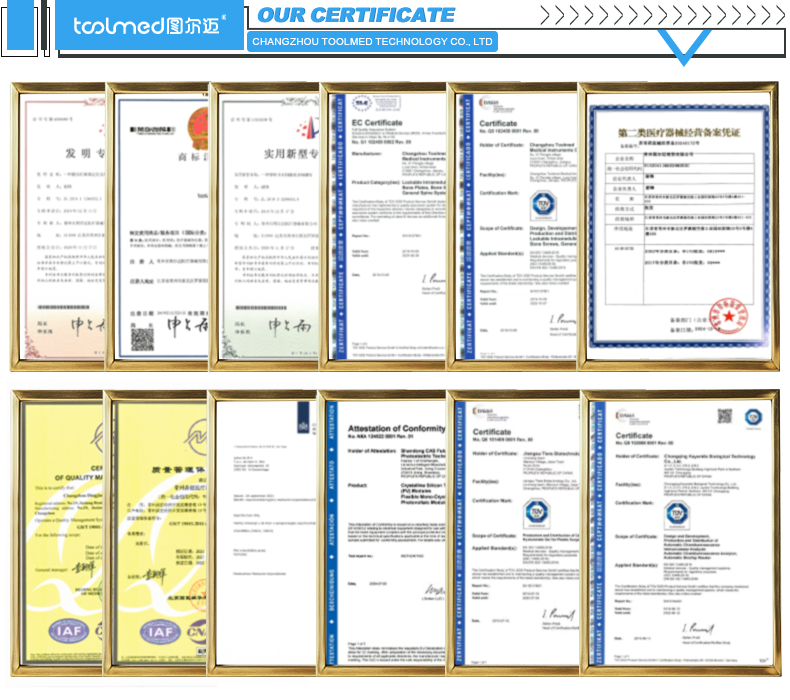
TOOLMED maintains a full documentation system that records everything from raw materials to machining parameters and cleaning reports. This makes regulatory submission easier and offers distributors confidence that each product batch can be traced back to its source if needed.
Only essential items are listed as examples:
This level of transparency is especially valuable for distributors entering markets with strict regulatory oversight.

TOOLMED’s production system follows major international frameworks such as ISO 13485, CE requirements, ASTM material standards, and relevant quality management principles. Instead of merely meeting the minimum, the company focuses on stability and reproducibility—factors that matter most when products are subjected to audits or market reviews.
The value of TOOLMED’s CNC-driven manufacturing extends beyond machining accuracy. It supports strong supply chain reliability by ensuring stable product quality, consistent batch-to-batch performance, and predictable delivery schedules. Distributors benefit from fewer complaints, easier regulatory approvals, and the confidence that comes with a manufacturer capable of maintaining tight tolerances without compromising efficiency.
Minimal bullet points are used here to summarize the real commercial impact:
These strengths make TOOLMED a dependable partner for distributors aiming to build sustainable growth in the orthopedic sector.
CNC precision is the foundation of orthopedic implant performance. Whether it’s controlling thread alignment, maintaining uniform hole spacing, or producing smooth surfaces that enhance surgical handling, machining accuracy directly influences patient outcomes and distributor confidence.
TOOLMED has built a manufacturing system where precision, consistency, and regulatory readiness work together. This commitment helps global distributors secure a stable supply chain and deliver safer, more reliable products to surgeons and patients worldwide.


